
When it comes to renewable energy, we often think big (federal subsidies, state mandates, sweeping climate policies). But according to Jeremiah Garrick, Manager of Community Engagement and Strategy at the COSSA Institute, we're missing the most critical piece of the puzzle: what happens on the ground, in local communities across America.
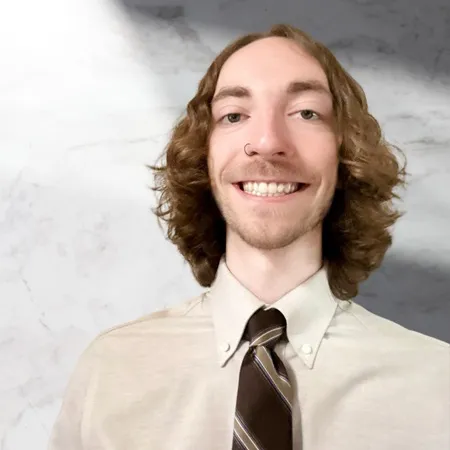
In a recent HeroX Speaker Series conversation, Garrick shared a powerful insight that should resonate with every innovation leader: "A lot of the development itself happens at a local level and projects can succeed or be killed at a local level, no matter what state or federal governments say."
This is the reality facing renewable energy projects across rural Colorado and beyond.
The Missing Link
A few years ago, Garrick and his colleagues recognized something crucial: while national and state trade associations were doing excellent work on policy, there was a glaring gap in support at the local level. Rural communities, the very places where solar farms and energy storage projects need to be built, weren't getting the education, outreach, or factual information they needed to make informed decisions.
The solution is an innovative two-pronged organizational structure that addresses both policy and people.
The Colorado Solar and Storage Association (COSSA) operates as a 501(c)(6) trade association, focusing on state legislative advocacy and business development. Meanwhile, the COSSA Institute, structured as a 501(c)(3) nonprofit, tackles the equally vital work of local policy review, community outreach, and education. This dual approach ensures that renewable energy advocacy goes further than the state capitol; it extends all the way to county commissioners and planning boards.
Fighting Misinformation with Connection
One of the Institute's most impactful initiatives is their "Solar in Your Community" symposia. These events bring together an unlikely mix of stakeholders: county commissioners, planning and zoning officials, solar developers, Colorado Parks and Wildlife representatives, and other experts, including water and fire professionals. The goal isn't to sell solar; it's to build relationships and combat the misinformation that spreads like wildfire on social media.
By creating spaces for honest dialogue, these symposia help decision-makers separate fact from fiction. They also foster lasting connections across the state, building a network of informed local leaders who understand what renewable energy can, and can't, deliver.
Reframing the Conversation
Perhaps most importantly, Garrick's work demonstrates the power of reframing. As he explains, "It's not all about climate change anymore. That still is a lot of people's focus, but this is affordability. It's reliability. It's making sure that we have the lights on in our communities."
This shift is strategic and essential. When renewable energy is positioned as a solution to keeping electricity affordable and ensuring someone's life-saving medical equipment stays powered, it becomes harder to dismiss as a partisan issue. It becomes about community resilience.
Turning Policy Blocks into Building Blocks
The COSSA Institute also does painstaking work reviewing local land use regulations, essentially "redlining" problematic language that could stall or kill renewable projects. The key is that they don't just demand flexibility. Instead, Garrick's team explains exactly why certain regulations create barriers: "We understand your intent with why you wrote this, but if you adopt the regulations as is, it's gonna make it really hard to facilitate development for X, Y, and Z reasons."
This approach, collaborative rather than confrontational, makes their input far more likely to be heard and implemented.
The Innovation Connection
Garrick's role is fundamentally about connecting disparate groups toward a common goal. It's about crowdsourcing solutions at the community level. This mirrors what HeroX does at scale through challenges like the American-Made Challenges in partnership with NLR, which tap into collective ingenuity to solve pressing energy problems.
Consider the challenge HeroX ran with Italian utility A2A, seeking innovative business models for local Solar Communities. Like Garrick's symposia, this challenge recognized that successful energy transition requires more than technology; it requires community buy-in and locally-tailored solutions.
Whether you're convening county commissioners in rural Colorado or launching a global crowdsourcing challenge, the principle is the same: innovation happens when you bring the right people together around the right problems.
The Path Forward
As we look to the future, local communities are grappling with emerging issues like agrivoltaics and project decommissioning, topics that will require the same grassroots engagement and factual education that Garrick champions.
The lesson for innovation leaders is clear: don't underestimate the power of local action. The most ambitious national initiatives can falter without community support. The most brilliant technologies can sit unused without trust and understanding at the local level.
Ready to explore how crowdsourcing and community engagement can accelerate your organization's innovation goals? Watch the full conversation with Jeremiah Garrick on the HeroX Speaker Series and discover how platforms like HeroX can help you solve your most pressing challenges—from the grassroots to the grid.
Resources
Image by andreas160578 from Pixabay