When Megha Mehdiratta talks about climate action, she doesn't lead with carbon credits or policy frameworks. She leads with people. Specifically, the people who are never in the same room together: the economists, the chemists, the lawyers, the community organizers. Her thesis is simple and quietly radical: the reason climate solutions stall between research and reality is not a lack of knowledge. It's a lack of infrastructure for collaboration.
Megha is the Senior Innovation Associate at the New York Climate Exchange (The Exchange), a nonprofit consortium led by Stony Brook University, with a mandate to accelerate climate solutions through unprecedented, inclusive collaboration across sectors. She joined the HeroX Speaker Series to talk about what it takes to build the programming layer from scratch, and what a 172-acre island in New York Harbor has to do with solving the climate crisis in New Delhi.
From India to Governor's Island

Megha's path to The Exchange runs through two continents and several careers. She started by helping facilitate foreign direct investment into India, work that gave her a granular understanding of how capital flows, or doesn't, toward solutions. She later founded a sustainable e-commerce platform before pursuing her Master's at Columbia, where the connective tissue between global development, climate, and finance snapped into focus.
That background shapes how she sees The Exchange's mission. The organization isn't just a research hub. It's an attempt to solve the institutional gap that currently prevents climate science from becoming a climate product.
"Solving for climate is an interdisciplinary problem. We need to bring together economists, lawyers, chemists, all in the same room, and no current institution can do that as of now."
A State of the Art Climate Campus
The Exchange is building a permanent home on Governor's Island, the 172-acre former military base sitting at the confluence of the Hudson and East Rivers. The planned multi- million dollar campus will function as a climate tech incubation accelerator, a policy sandbox, and what Megha calls a "study abroad" for climate action, where practitioners from around the world come to learn, test, and deploy solutions in a uniquely complex urban environment.
"We are creating a living test bed to explore what it means to have and build urban resilience."
While campus development is underway, the team’s programming is organized around three pillars: Climate Data, Climate Finance, and Urban Resilience. On the data side, The Exchange is working with partners to make large datasets legible and accessible to scientists and researchers,as well as for local communities and environmental justice organizations who've historically had no access to the tools to use them. On the finance side, the goal is to build pathways that enable climate solutions to reach commercial viability. Urban resilience ties it together: how does a city of eight million people adapt to rising seas, intensifying heat, and aging infrastructure simultaneously? Under this pillar, The Exchange launched its climate tech incubation program, a six-month hybrid program that combines expert-led curriculum, 1:1 mentorship, non-dilutive funding, and access to The Exchange's global partner ecosystem. By bridging the gap between research and real-world deployment, we help promising innovators take the next critical step from concept to a commercially viable climate solution.
The 2026 Climate Tech Fellowship call is now OPEN. New CEO M. Sanjayan brings global conservation leadership to an organization that's already operationally serious and structurally ambitious.
New York as a Proxy for the World
What makes The Exchange's framing genuinely interesting is the argument that solving for New York City is, in a meaningful way, solving for everywhere else.
Megha draws a direct line between coastal flooding in lower Manhattan and crop residue burning outside New Delhi, between the grid vulnerabilities of a dense American city and the energy access gaps in the Global South. The technical and governance challenges are different, but the underlying problem structure, how do you coordinate actors across sectors to act at speed and scale, is the same.
"If you're able to solve for New York City, a lot of the problems around the world can be adapted. My mind and heart are definitely in New York, but my heart also lies in India and the Global South."
The first cohort of Climate Tech Fellows reflects that ambition. It includes projects like GridSeer, which uses advanced modeling to improve distributed energy efficiency, and Wholome Arcs, a modular ecosystem for reef restoration. These aren't moonshots. They're early-stage ventures that need what The Exchange is designed to provide: access to an ecosystem, proximity to policymakers, a proving ground, and a path to commercialization.
Where HeroX Comes In
HeroX brings a community of 300,000 problem solvers to the table, and roughly half of them work directly with startups. That's not coincidence, it's alignment. The Exchange needs people who can move between domains, who are comfortable with ambiguity, and who want to work on problems that are genuinely hard. The kind of people who show up to an open innovation challenge because the problem itself is worth solving.
The next generation of climate solutions requires a radical kind of collaboration. Whether you are an innovation manager looking to scale tech or an entrepreneur ready to pilot in New York City, the doors to The Exchange are open. Watch the full conversation on HeroX and learn how you can join the 2026 Climate Tech Fellowship cohort.
Resources
- Climate Tech Fellowship Application
- New York Climate Exchange Website
- New York Climate Exchange LinkedIn
- New York Climate Exchange Instagram
- Connect with Megha on LinkedIn
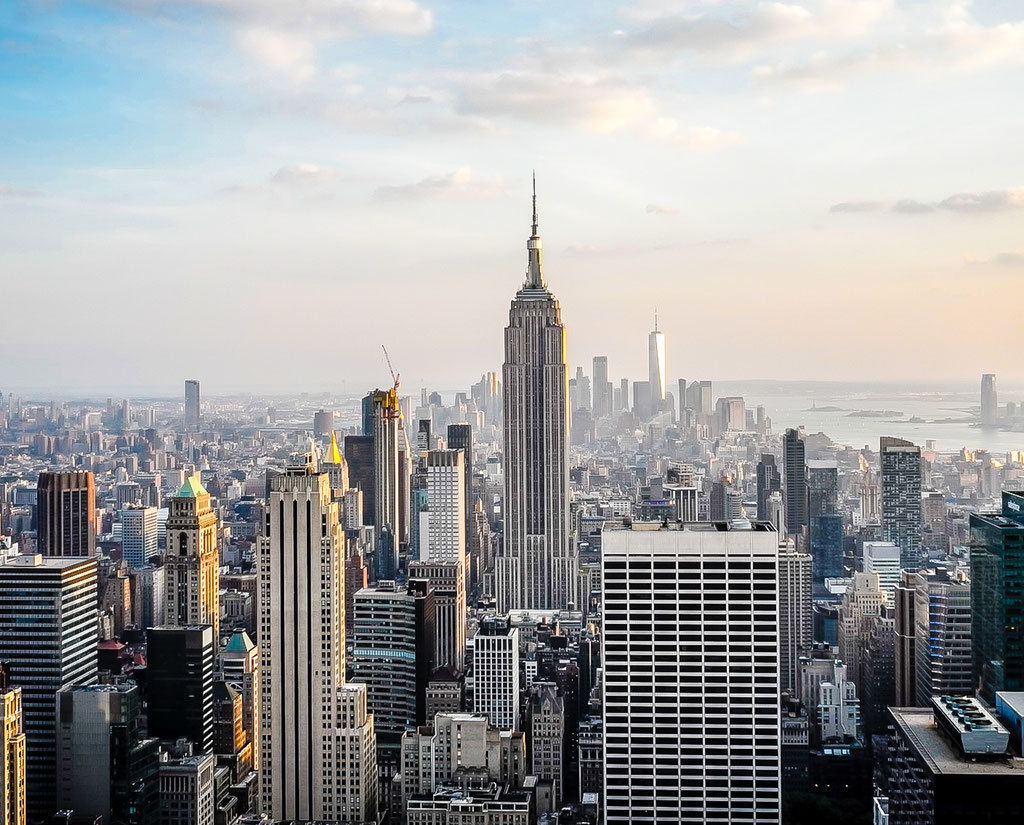
Image by Leonhard Niederwimmer from Pixabay