
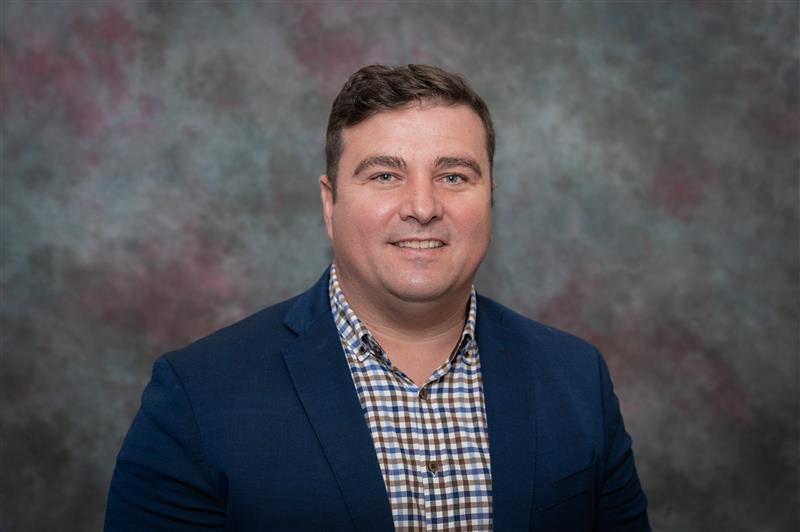
Liam Kelly, Provincial Director of Research and Innovation at NL Health Services, shares his "Living Lab" framework—a highly disciplined, clinical trials-based approach to innovation that systematically de-risks new technology by focusing first on Acceptability and Feasibility, not just efficacy.
What if healthcare systems stopped "trying stuff" and started testing innovation the way they test life-saving drugs?
That's the radical—yet surprisingly obvious—question that Liam Kelly asked himself when he took on the challenge of leading innovation across an entire healthcare system in Newfoundland and Labrador, Canada. In our latest HeroX Speaker Series conversation, Liam shared how he's bringing the rigor of clinical trials to the messy, fast-moving world of digital health and process innovation.
From Elite Athletes to Everyday Patients
Liam's journey to this framework is anything but typical. With a background in exercise physiology and kinesiology, he spent years optimizing performance for elite athletes. But somewhere along the way, he had a realization: the same principles that help athletes perform at their peak could transform care for people managing chronic disease.
That insight led him from the lab to the front lines of clinical epidemiology, and eventually to his current role leading research and innovation for NL Health Services—one of the largest integrated health systems in Canada, covering acute care, primary care, long-term care, and public health across an entire province.
The Shelf Problem
When Liam stepped into his role, he saw a troubling pattern. Healthcare organizations were drowning in shiny new technologies and "innovative" solutions. But most of them ended up collecting dust on a metaphorical (or literal) shelf.
Why? Because unlike pharmaceuticals, which must pass through rigorous Phase 1, 2, and 3 trials before reaching patients, digital health and process innovations had no standardized evaluation pathway.
"The burden of evidence is so high, but there wasn't a model for us to be able to do technology, process innovation, digital innovation-type work. So, what I did was look at the clinical trials model."
Enter the Living Lab
Liam's solution was to embed, into NL Health’s pre-existing “Living Lab” a systematic approach answering specific questions around acceptability, feasibility, efficacy, value, and commercialization. NL Health’s Living Lab is a systematic sandbox for disruption that applies clinical trial methodology to non-pharmacological innovation. Think of it as treating every new technology, workflow, or digital tool like an experimental drug that must prove itself in carefully designed stages.
The framework has four distinct phases, each designed to answer specific questions before moving forward:
Pre-clinical: Does the innovation actually match the problem we're trying to solve? Does it meet regulatory requirements? What are the human factors at play?
Phase 1 – Acceptability: This is the critical first gate. Before anyone talks about outcomes or cost savings, Liam's team asks: Is this acceptable to patients? Is it acceptable to the providers who will use it day-to-day?
"The very first question we'll ask is, is the solution acceptable? Right? That means, is it acceptable to a patient? Is it acceptable to the providers? Then we would go towards feasibility."
Phase 2 – Feasibility: Can we actually measure the outcomes we care about? Can this solution integrate into existing workflows without breaking the system?
Phase 3 – Value/Commercialization: Only now do they deploy at scale to measure the ultimate metric: Value = Outcomes / Cost. This phase also supports economic development by helping local companies prove their solutions work.
Failing Forward with Evidence
One of the most powerful aspects of this framework is how it reframes "failure." In traditional innovation, a solution that doesn't work feels like wasted time and money. In Liam's model, every phase produces valuable evidence.
"If you set it up to answer a question, if you design something in such a way, you're not failing, you're getting an answer. It may not be the answer that you want at that point in time, but it is an answer that helps you then to pivot."
This de-risks innovation for everyone—public funders, hospital administrators, and innovators themselves. Small, controlled deployments answer specific questions before committing to system-wide change.
Real-World Impact: The Discharge Hub
The proof is in the results. Liam shared the example of addressing "Alternate Level of Care" (ALC) days—when patients who are medically ready for discharge remain in acute care beds because they lack proper home supports. Working with a local company through the Living Lab framework, they co-developed a discharge hub solution that significantly reduced ALC days, freeing up critical hospital capacity while improving patient outcomes.
This wasn't magic. It was method.
The HeroX Connection
This conversation sparked immediate connections to how challenge-based innovation can accelerate evidence generation. Whether it's the NIH's New Approach Methodologies challenges or community-driven maternal health initiatives, the same principle applies: structure the pathway from idea to proof.
HeroX specializes in sourcing diverse solutions from unexpected places—the frontline workers, community innovators, and entrepreneurs who see the real-world barriers every day. Combined with a framework like Liam's Living Lab, those ideas can move from "interesting" to "implemented" with unprecedented speed and confidence.
Watch the Full Conversation
Want to hear more about building an evidence-based innovation pipeline in a regulated industry? Watch the complete HeroX Speaker Series episode with Liam Kelly for a deep dive into systematic de-risking, partnership strategies, and how to move from acceptability to value.
If your organization is struggling to move beyond "trying stuff" to proving what works, contact HeroX to explore how our structured challenge model can accelerate your innovation pathway.
External Resources
- Featured Organization: NL Health Services: https://nlhealthservices.ca/
- Recommended Framework: Healing Centered Engagement (Dr. Shawn Ginwright) — https://ginwright.medium.com/the-future-of-healing-shifting-from-trauma-informed-care-to-healing-centered-engagement-634f557ce69c
Image by Gerd Altmann from Pixabay