This episode was recorded in September 2026
If you ask Dr. Sherri Braxton-Castanzo what makes digital transformation succeed in higher education, she won't start with a tool or a platform. She'll start with a mission statement.
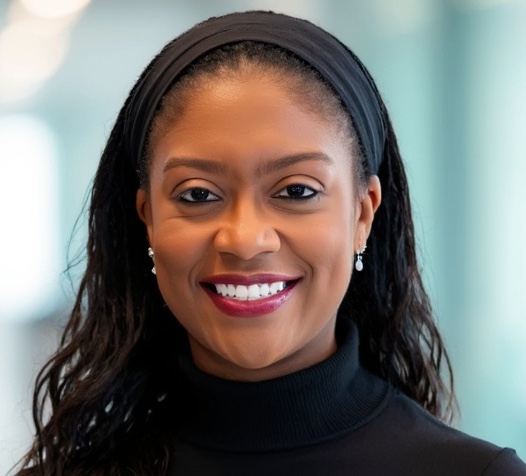
As Deputy CIO for Digital Innovation at Bowdoin College, Sherri has spent her career sitting at the intersection of technology and trust. She co-chaired the development of the Open Badges 3.0 standard, now used across higher education and industry to verify skills and credentials. She's leading Bowdoin's AI implementation. And she built one of the first mature micro-credentialing programs in the country at the University of Maryland Baltimore County, starting all the way back in 2015.
In our latest HeroX Speaker Series conversation, Sherri made one thing clear: rolling out new technology on a college campus has almost nothing to do with the technology itself.
"The tech is easy. It's really about people understanding the why. Why it's important. What's the value of it."
That distinction matters more than it might sound. Digital badges, for instance, aren't just graphics people slap on a LinkedIn profile. They're structured, machine-readable records of a specific competency, backed by evidence and criteria that anyone, an employer, a graduate school, another institution, can trust and verify. According to a recent AAC&U survey Sherri referenced, 81% of employers say a candidate with a micro-credential in addition to a degree has a real hiring advantage. Badges are becoming a kind of resume 2.0, giving students a way to point to proof, not just claims.
But getting an entire campus, faculty, staff, and students to embrace that shift takes years, not a product launch. Sherri leans on two well-known change frameworks, Kotter's model for institutional change and the Prosci ADKAR model for individual change, and applies them simultaneously. Because in higher ed, unlike a corporate rollout where leadership can simply mandate a deadline, you have to earn buy-in one relationship at a time.
"You cannot work like that in higher ed. It is consensus building. It's making sure people understand the value proposition, and everyone trying to work toward that same goal."
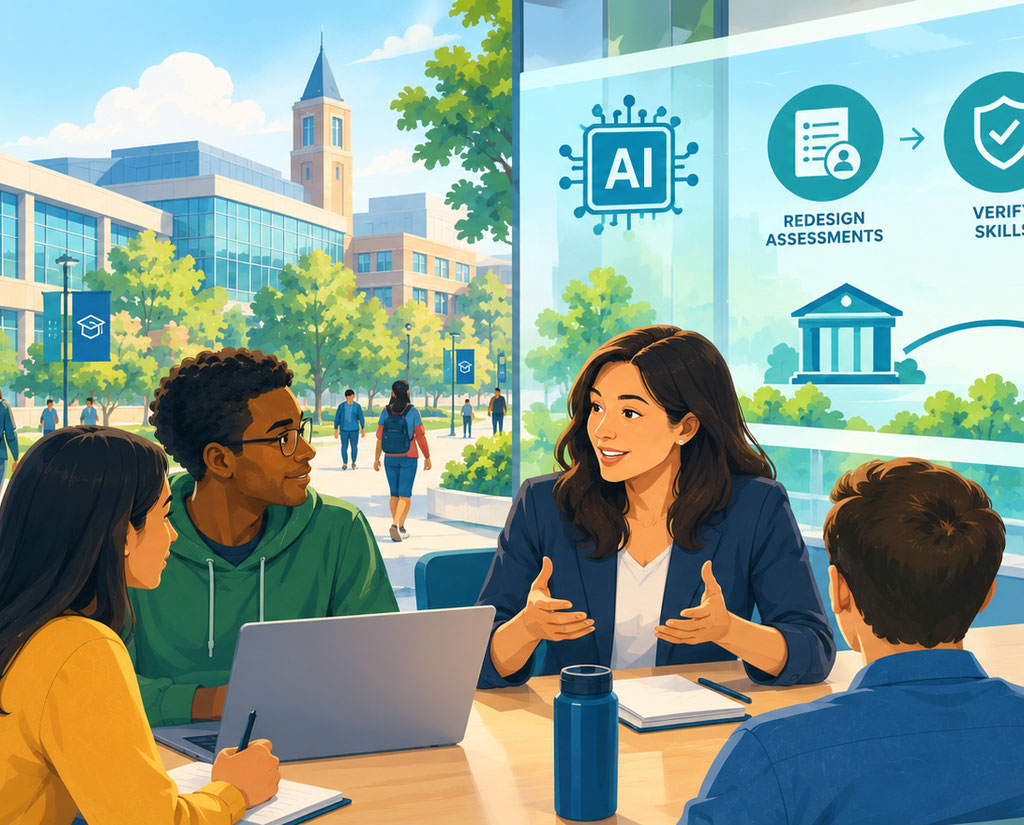
That same patience shows up in how Bowdoin is approaching AI. Rather than treating generative AI as a cheating problem to police, Sherri's team is asking faculty to rethink how they teach and assess altogether. Instead of banning tools or chasing academic integrity violations, they're helping instructors redesign assignments so they actually test the reasoning and skills AI can't replicate.
"You have to reimagine and redesign your assessments so they're AI-proof. You can't just ask students to write a paper anymore."
It's a subtle but important reframe: the goal isn't catching students who use AI, it's building coursework that makes the skills worth having obvious, with or without a chatbot in the room. Employers, she noted, are increasingly asking for exactly that combination: AI fluency paired with the durable human skills, like ethical judgment and cross-cultural communication, that liberal arts institutions have always prided themselves on.
Sherri's approach to innovation carries a simple throughline: start small, prove value through pilots, and let champions tell the story instead of leadership pushing a mandate. She's watched institutions stumble when presidents or provosts try to force change from the top down without first building trust. In her world, resistance isn't an obstacle to route around. It's a signal telling you where the real concerns live, about quality, workload, or trust, and it deserves a real answer, not a workaround.
Looking ahead, Sherri's focus for 2026 stretches beyond the classroom. She wants Bowdoin's operational offices, admissions, registrar, HR, to get as fluent in AI as its students and faculty. And she's pushing to capture the "hidden curriculum" students build through campus jobs and internships, skills that never show up on a transcript but matter enormously to the next employer.
Her closing thought is one every industry could learn from: measure impact in human terms first. Trust built. Access expanded. Confidence gained. The technology metrics will follow.
Want the full conversation? Watch the episode below to hear Sherri's take on building institutional trust, why "urgency" is the wrong lever to pull in higher ed, and what she'd change about the future of the college degree.