
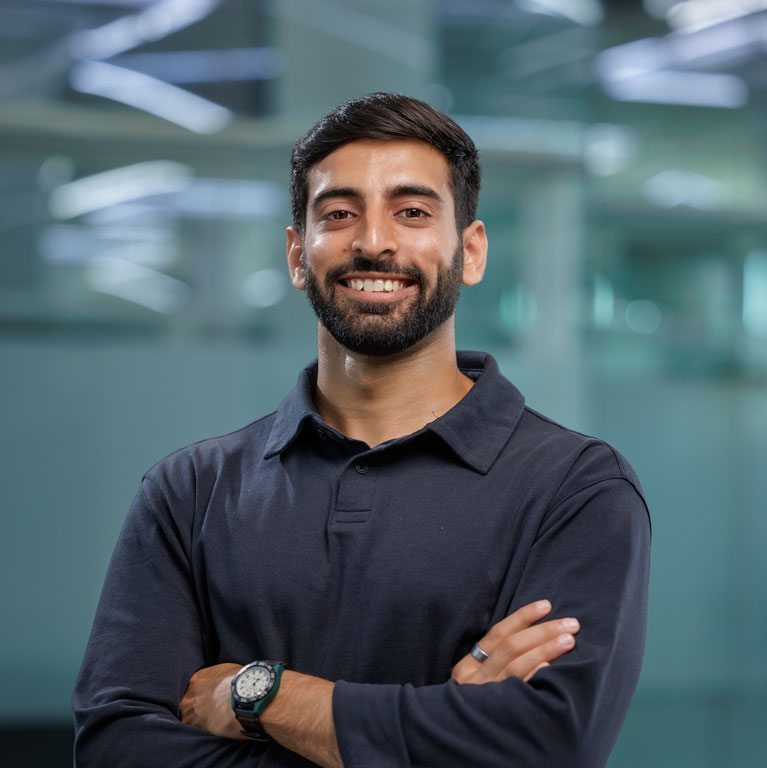
When Ayush Sindhwani left India to pursue a business degree at Notre Dame, he had one job in mind: product manager, ideally at a company like Google. Two years later, he's an Operations Research Analyst at enFocus, a nonprofit consulting organization serving the South Bend and Elkhart region of Indiana, and he's worked on everything from healthcare workforce data to city licensing systems to entrepreneurship fundraising. He still wants to be a product manager. He just took the long way there, and he wouldn't trade the detour for anything.
A Nonprofit Consulting Model Built on Relationships, Not Retainers
enFocus runs on a simple but unusual model: bring in a two-year cohort of "fellows," place them with regional organizations that need help but can't afford McKinsey or BCG rates, and hope the sponsoring organizations hire those fellows permanently when the fellowship ends. Ayush describes it as a nonprofit consulting firm, minus the price tag, serving hospital systems, city departments, and manufacturing firms across the region.
What makes it different isn't the framework. Ayush is quick to point out that every consulting firm in the world solves problems roughly the same way. The difference is the web of relationships fellows build across the region, relationships that let them skip the cold-start problem entirely.
"No matter what consulting firm you go to in the world, everybody follows the same framework. What's really unique about enFocus is the relationships we have here. If one healthcare organization needs help, we don't have to start from scratch. We can be the liaison between organizations that all want this region to prosper."
That network showed up directly in his work with the South Bend Regional Chamber on a healthcare workforce initiative called the Health Talent Alliance, an effort to map out regional healthcare staffing shortages so local schools can train toward the roles actually in demand. Healthcare workers don't have spare time to fill out surveys, Ayush points out, so getting the data required leaning on fellow contacts, city sponsors, and IT staff at partner organizations just to find the right person to ask.
The results have been tangible elsewhere too. A software licensing audit Ayush ran for the City of South Bend's Innovation and Technology Department uncovered outdated licenses and saved the city roughly $15,000 to $20,000 annually, money that matters even more given recent cuts to federal and state funding. In Elkhart, a research project on what makes the city unique evolved into direct conversations with the mayor and school superintendent about redirecting fundraising toward institutions that have no formal channel to ask for it.
The Advice: Stop Narrowing Too Early
Ayush's biggest lesson from the fellowship is one he learned the hard way, by almost not taking the job at all.
"I came in thinking, I want to apply to Google, I want to be a product manager. That's when I realized I was limiting myself. There are several paths to get to that goal, and being open to taking a different path and learning new things is really important."
He nearly turned down enFocus because it didn't look like the direct route to product management. Instead, it became the thing that taught him how to pivot quickly across industries, work he says product managers need to be able to do anyway.
The other piece of advice ties directly to how enFocus operates as a small team.
"The best thing about small teams is the mentorship you get. You're not scared they'll fire you and replace you with someone else if you make a mistake. Being able to make mistakes, fail fast, and learning from those, finding a team where you feel comfortable doing that, is really important."
What's Next
enFocus is navigating the same funding pressures hitting nonprofits everywhere, leaning harder on its regional relationships to fill the gaps left by shrinking grants. It's also expanding a pro bono arm that lets fellows spend part of their time helping local entrepreneurs get startups off the ground, work Ayush sees as core to the mission even as budgets tighten.
As for Ayush, he's wrapping up his two years and is now applying for product management roles, this time with a much narrower, much clearer sense of the industry and function he wants to pursue. The wide-angle experience, he says, was the point. Now it's time to focus.
Want the full story, including how enFocus keeps its fellowship cohorts full, what a "talent pipeline management" model actually looks like in practice, and Ayush's take on relocating for opportunity? Watch the full episode below.
External Links