
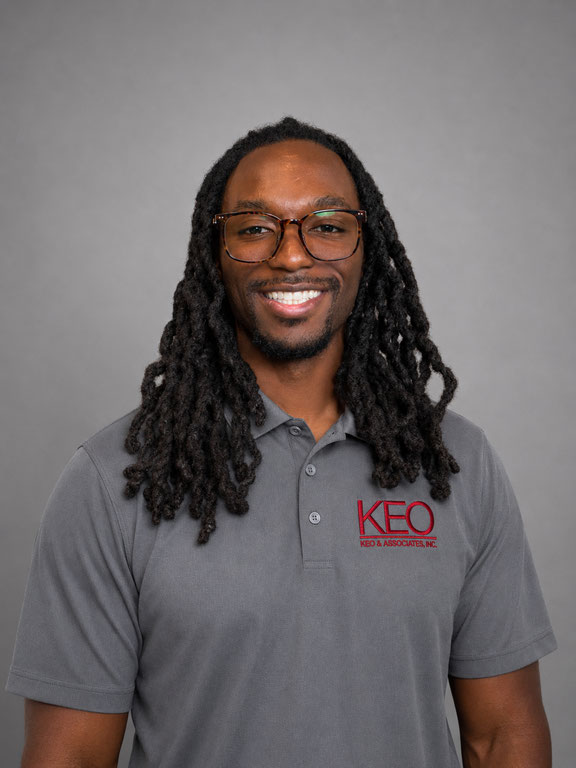
Most data scientists dream of landing at McKinsey or a tech giant. Buka Onwuzurike did exactly that… and then made a surprising choice: he left to return to his family's construction business to modernize an industry that's notoriously resistant to change.
In a recent HeroX Speaker Series conversation, Buka shared how he's applying world-class data science expertise to KEO & Associates, a 32-year-old general contracting firm, proving that innovation isn't just for Silicon Valley; it's for anyone willing to build the right foundation.
The Competitive Gap in Construction
The thing about the construction industry is that it's decades behind when it comes to technology adoption. While that might sound like a problem, Buka sees it differently. For small-to-mid-size enterprises like KEO & Associates, this technology gap represents a massive strategic advantage.
"The construction industry is generally not up-to-date with tech and innovation," Buka explains. For lean, agile companies willing to embrace digital transformation, there's an opportunity to "crack the code" and outmaneuver larger competitors who are slower to adapt.
Innovation Starts with the Unglamorous Work
Before you can build dashboards or predict project outcomes, you need clean data. Buka's first priority wasn't flashy AI or machine learning. It was the decidedly unglamorous work of establishing a scalable data foundation.
"Eighty to ninety percent of data science is cleaning and centralizing data," he notes. KEO transitioned from messy, localized file systems to a clean, scalable structure in the Microsoft 365/SharePoint cloud suite. It's not sexy, but it's essential. Without this foundation, every innovation initiative is built on quicksand.
Meeting People Where They're At
One of Buka's most powerful insights? Innovation fails when it's too complex for the people who need to use it. Instead of implementing sophisticated tools like Power BI or Tableau, Buka created a collaborative Production Tracker using Excel, hosted on SharePoint so everyone from project managers to superintendents to accountants could easily input and interact with data.
"They say you're as fast as your slowest leg, or as strong as your weakest link. So it's kind of meeting everyone where they're at."
This philosophy extends to how he introduces technology across the organization. Like helping a friend navigate New York City, you start from where they are, not where you want them to be. It requires patience, but it ensures adoption and lasting change.
Building Intellectual Capital, One Bid at a Time
Perhaps Buka's most innovative project is the Construction Database, a system designed to capture institutional knowledge and move beyond what he calls "head knowledge." The database tracks historical cost data from every bid, won or lost, and every completed project.
"We weren't intellectually getting better with each at-bat, if that makes sense."
Now, KEO can use concrete, scope-specific data for future project estimations, getting smarter and better with every opportunity. It's the kind of learning effect that compounds over time, creating a moat that's difficult for competitors to cross.
The Small Company Advantage
In an industry dominated by large contractors, KEO leverages what Buka calls their "lean" advantage. Smaller companies can shift direction quickly, make decisions faster, and hold vital cross-functional meetings in minutes rather than weeks.
Buka's strategic vision connects all the pieces: technology supports operations, which supports people, which ultimately supports strategy. By focusing on key sectors like healthcare and education, KEO gains expertise that larger generalists can't match. And by staying lean, they can reward their best people with a bigger piece of the pie.
"The main thing was, in terms of the vision, technology empowers the operations, and then operations empower the people, and the people ultimately empower the strategy."
Data-Driven Innovation in the Public Sector
KEO's work extends to government agencies like the GSA and FAA, organizations that are also embracing data-driven approaches to solve complex challenges. This mirrors HeroX's own work in the public sector, including the FAA Data Science Challenge, where a winning student team used speech recognition technology to identify stress patterns in air traffic control communications. Whether it's construction or aviation, the message is clear: traditional industries are ripe for transformation when you combine domain expertise with data science.
Your Turn to Innovate
Buka's story proves that you don't need to be a tech company to think like one. The biggest opportunities for innovation often lie in the industries that have been slowest to change.
Ready to learn more? Watch the full conversation with Buka Onwuzurike to dive deeper into his approach to digital transformation in traditional industries. And if you're looking to leverage crowdsourcing for scalable, data-driven innovation in your organization, explore how HeroX can help you tap into global talent and breakthrough solutions.
External Links
The HeroX Speaker Series brings together innovators, entrepreneurs, and thought leaders who are using creative approaches to solve complex challenges. Subscribe to catch future conversations.