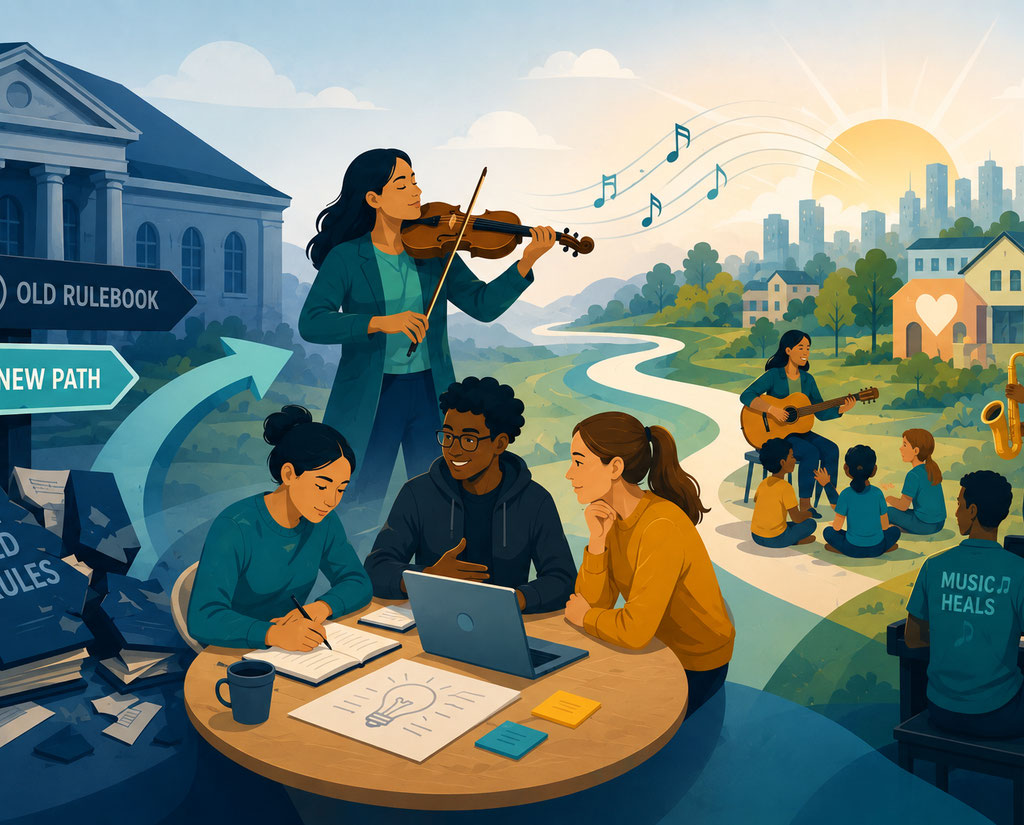
There are roughly a few hundred full-time orchestra positions in the United States. Yet thousands of students enroll in conservatories every year, training almost exclusively for that narrow path. For most of music education's history, nobody asked the obvious question: why?
Longy School of Music asked. And then they restructured everything around the answer.
Rebecca Teeters, Associate Dean at Longy, joined the HeroX Speaker Series to walk through how an over 100 year old conservatory dismantled its own curriculum and replaced it with something radically more honest about what musicians actually need to thrive in the world.
Start with the Why, Not the Repertoire
At the center of Longy's transformation is a deceptively simple question asked of every incoming student: What impact do you want to have?
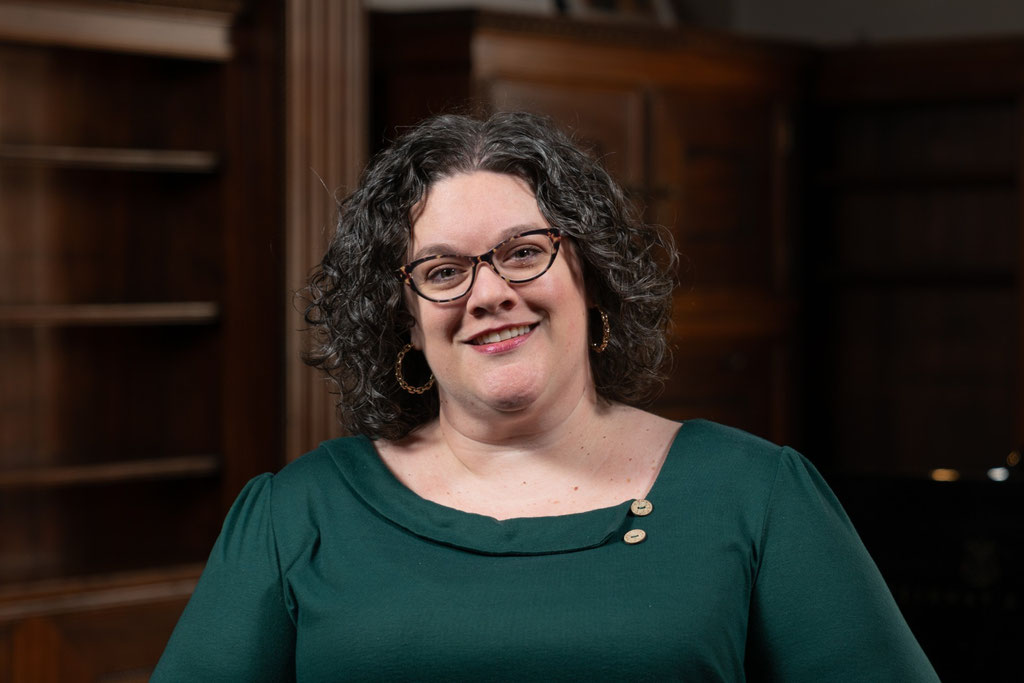
Before technique classes, before repertoire, before any of the usual conservatory machinery kicks in, students are asked to write an artist statement that pins down their values and defines their purpose. It's called the Catalyst Curriculum, and it reframes the entire educational experience around one idea: music as a vehicle for something larger than performance.
"We are challenging the status quo and truly believe that the world needs more musicians now than ever. Our role is preparing students to go out and make a difference in the world." -- Rebecca Teeters, Associate Dean, Longy School of Music
This mindset is built into core coursework that covers entrepreneurship, audience engagement, branding, and financial literacy. These are skills that conservatory students have historically been expected to figure out on their own, usually after graduation, usually the hard way. Longy decided to treat them as foundational.
Failure Is Part of the Curriculum
One of the most telling details Rebecca shares is the "Curation Intensive," a first-year exercise that pushes students from initial ideation to a proposal and live pitch in under two days. Most of them don't get it right on the first try. That's the point. "We create a space where students can try, do it, and fail. And that's okay."
This maps directly onto how successful innovation actually works, inside organizations like HeroX and beyond. Iteration isn't a sign of weakness. The willingness to move fast, collect feedback, and revise is what separates teams that make progress from teams that protect the status quo.
Longy institutionalized that mindset. And the results show up in the work students pursue after graduation: therapeutic music practitioners now employed by hospitals, partnerships with housing authorities to bring music programming into underserved communities, free music school proposals developed by students for neighborhoods without access.
Rethinking Who Gets In the Door
The innovation didn't stop at the curriculum. Longy eliminated application fees and added a mission alignment statement to its admissions process. The effect was immediate: the applicant pool shifted. Students who wanted to use music as a tool for civic engagement, healing, and social change started finding their way to Longy because Longy made it clear there was a place for them. Most organizations, educational or otherwise, still design their front door for the applicant they used to serve, not the one they want to attract.
What This Means for Innovators Outside Music
The throughline of Rebecca's story resonates broader than music education, as well. It's about what happens when leadership is willing to sit with the question, "Why do we do it this way?" and actually wait for an honest answer.
Longy's president, Karen Zorn, modeled that. She actively challenged the phrase, "But we've always done it this way." She gave her team permission to build something new. That combination of senior buy-in and a clear mission is what made the transformation possible, and it's the same combination that drives successful innovation challenges across every sector.
Longy measures success by looking at what alumni are doing five to ten years out. Not how many landed orchestra seats, but how many created something meaningful with their training.
That's a different kind of scorecard. And it might be the one your organization needs too.
Watch the full conversation with Rebecca Teeters on the HeroX Speaker Series. If Longy can reimagine an over 100 year old conservatory from the ground up, what assumption in your own organization is overdue for a hard question? The episode goes deeper on curriculum design, institutional change management, and building cultures where experimentation is safe. Watch it now below.
External Links: