
When most people think of rural Newfoundland, they think of outmigration, an aging population, and communities quietly shrinking into the landscape. Gander, a town of roughly 13,000 perched on the northeastern edge of the island, is telling a different story.
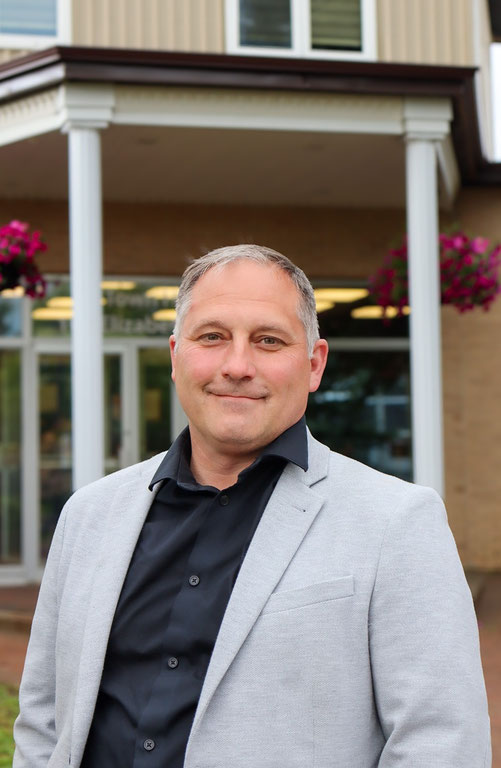
Brad Hefford, Chief Administrative Officer for the Town of Gander, sat down with HeroX to talk about what it actually takes to lead a small municipality in a competitive global environment. The conversation was candid, practical, and at times, a little uncomfortable in the best way.
A Town That Defies the Regional Trend
Gander was built around aviation. Its international airport served as a critical refuelling stop for transatlantic flights, and that legacy shaped a community with an unusually cosmopolitan identity for its size. Today, Gander has seen 23% population growth since 2001, a figure that stands in sharp contrast to the broader Newfoundland pattern of decline.
That growth is not accidental. It is the result of deliberate strategy, a willingness to invest ahead of need, and a leadership culture that treats risk as a feature rather than a bug.
The Housing Pivot That Actually Worked
For a while, Gander's growth was running into a wall. The town was recruiting medical professionals, attracting newcomers, and building economic momentum, but there was nowhere for people to live. Housing capacity had become an active impediment.
The response was a rebranded housing initiative called "Build Up Gander." On the surface, it sounds like a name change. In practice, it reflected a real shift in how the community talked about and prioritized growth. Last year alone, the initiative supported 95 new housing units, a meaningful number for a town of Gander's size.
Public Transit in a Place That Doesn't "Do" Public Transit
One of the more surprising parts of Hefford's story is Gander's push into public transit. Newfoundland communities are generally decentralized and car-dependent. Transit infrastructure is rare. But Gander is building one anyway.
The reason is strategic. As immigration increases and newcomer populations grow, offering residents the option to live without a car is both a quality-of-life issue and a competitive one. Communities that can attract and retain newcomers are the ones that will grow. Communities that cannot will not.
"If you're not taking risks and trying new things and putting yourself in a position where you could fail, you're almost destined to fail anyways. Somebody out there is going to be doing it differently than you are, and they're going to succeed, and you'll be left behind."
The Mindset Problem Behind Every Infrastructure Decision
Hefford is direct about the biggest obstacle Gander faces, and it is not money or geography. It is the expectation that public services should pay for themselves.
"I would challenge anyone on municipal services, water, sewer, road construction. If we relied on those to be revenue-positive or income-generating, we would never do it."
Transit, like roads or water infrastructure, is a public good. The value it creates is indirect, distributed across the community, and often unmeasurable in a quarterly budget. But when councils and communities demand that a bus system generate profit before it even launches, the conversation ends before it starts. Hefford calls this a "poison pill" for progress, and he is working to change the framing.
Resourcefulness Is Not the Same as Innovation
One of the sharper distinctions in this conversation is the one Hefford draws between resourcefulness and innovation. Newfoundlanders are famously resourceful, forged in part by the collapse of the cod fishery in the 1990s. But resourcefulness, he argues, is a survival response. It is what you do when you have no other options.
Innovation requires something different: capacity, margin, and room to ask "what if" without the pressure of immediate need. A growth economy enables those questions. A survival economy cannot afford them.
"I think a growth economy is much more conducive to innovation."
This distinction matters for any organization, municipal or otherwise, trying to understand why good intentions and hard work do not always produce breakthrough results.
The Loneliness of the Small-Town CAO
Leadership at this level can be isolating. Hefford speaks openly about the value of peer networks like the Canadian Association of Municipal Administrators (CAMA) in helping small-town administrators share resources, learn from each other's hard lessons, and avoid reinventing the wheel. For communities without large administrative teams or specialized departments, these networks are not a nice-to-have. They are infrastructure.
This is the same logic that drives crowdsourcing platforms like HeroX: the best solutions rarely come from within a single organization. The Edmonton Police Foundation used HeroX to tackle catalytic converter theft, a community problem that required community-scale thinking. Gander's story suggests that the same openness to outside input, whether from peer networks, newcomers, or new ideas, is what separates growing towns from declining ones.
What Gander Gets Right
Gander is not a large city with deep pockets and a planning department full of specialists. It is a mid-sized town in a province that has spent decades managing decline. What makes it interesting is not the scale of its ambition but the clarity of its thinking.
Growth requires investment before certainty. Services require political will before profitability. And competing in a global environment for talent and residents requires the willingness to look like you might fail.
Smart, capable people live in rural communities everywhere. Technology, infrastructure, and the right leadership mindset can make those communities competitive in ways that were not possible a generation ago. Gander is proving it.
Watch the full conversation with Brad Hefford and explore how HeroX can help your community identify and solve its toughest challenges with a Problem Discovery Workshop.