Sheldon Varghese didn't set out to become an RV engineer. After finishing his master's in mechanical engineering at Purdue, he was, in his own words, still figuring out what domain to commit to. Mechanical engineering is broad enough that picking a lane can feel impossible.
So he didn't pick one. He joined enFocus instead.
enFocus is a nonprofit based in South Bend, Indiana, that recruits engineering talent and rotates them through manufacturers across the region, working on everything from process improvement to ERP systems to product design. For Sheldon, that rotation became the fastest education he could have asked for. He worked with a boat manufacturer rebuilding a broken bill-of-materials system. He worked on AWS computer vision tools, training models to catch manufacturing defects. And eventually, one of those rotations placed him at Christianson Industries, where he's now an R&D engineer designing slide-outs, ladders, grab handles, and Murphy beds for RVs.
The fellowship model gave him something a single first job rarely does: a side-by-side comparison of how different companies actually operate. And the biggest difference he noticed wasn't about industry or product. It was about mindset.
"There are two types of mindsets in manufacturing. Either you take a sufficient amount of time and come out with a perfect product focused on quality, or you focus on speed to delivery. Christianson is on the speed-to-delivery side, because we're competing hard in the RV industry. We're pushing out projects as fast as we can without compromising cost and quality."

That speed shows up in how his team works. Ideas start as loose pencil sketches, deliberately unconstrained, before getting translated into CAD where the real-world limitations show up. From there, designs get cut on a laser cutter, refined over three or four iterations, and sent to the client for approval. It's fast, but it's not careless. The looseness is the point. Sheldon explained that when you draw something rough first, your mind is as creative as it's going to get, before you start thinking about constraints.
Nothing captures that philosophy better than the story of a small plastic bracket. Christianson needed a part to hold a spare-tire light carrier in place on a camper trailer, something simple, road-legal, and compliant with safety regulations. Sheldon's manager sketched a rough boomerang shape in about ten minutes. They laser-cut it the same day.
"It costs us about seven bucks to make and we sell it for eighteen. We're shipping 30 to 35 units a month, about 350 a year. That's over six thousand dollars in profit from something we cooked up in ten minutes."
It's a small number in the context of a company's annual revenue. But it's a useful reminder that not every win needs a quarter-long roadmap. Sometimes the fastest sketch in the room is the one that ships.
That same instinct for speed and standardization is driving Sheldon's current project: redesigning the mechanism behind Murphy beds. Most Murphy beds on the market today fold in only one direction, like a flip phone. Sheldon's team is building a version that can flip on either axis, so instead of engineering a new mechanism every time a client's configuration changes, Christianson can sell the same standardized product into multiple use cases. It's a shift from reactive design, building exactly what a client asks for, to proactive design, building flexibility into the product before the request even comes in.
Of course, no conversation about modern engineering work is complete without AI, and Sheldon doesn't sugarcoat where the tension sits. At the leadership level, adoption is easy because AI removes friction. On the floor, it's a different story.
"From a top-down perspective, AI is really useful because there's no resistance to that change. But as we trickle down to production and engineering, it's not always welcome, because we see it as a threat to our own work. At the same time, we recognize it's making us work faster."
His answer to that tension isn't to avoid AI or blindly trust it. It's validation. Every AI-assisted recommendation at Christianson still has to pass through real-world testing, RVIA load-bearing regulations, and physical verification before it ships. AI can speed up the thinking. It can't skip the proof.
That's the thread running through everything Sheldon talked about: speed paired with discipline. Move fast on the sketch, slow down on the verification. Standardize what you can, but never standardize away the safety check. It's a mindset that scales from a ten-minute bracket design to a company-wide AI strategy, and it's exactly the kind of practical, lived-in innovation thinking worth hearing in full.
Want to hear the rest of Sheldon's conversation with HeroX? Watch the full episode below to learn more about his journey through enFocus, how Christianson approaches risk in engineering decisions, and what's next for standardizing RV design.
External Links:
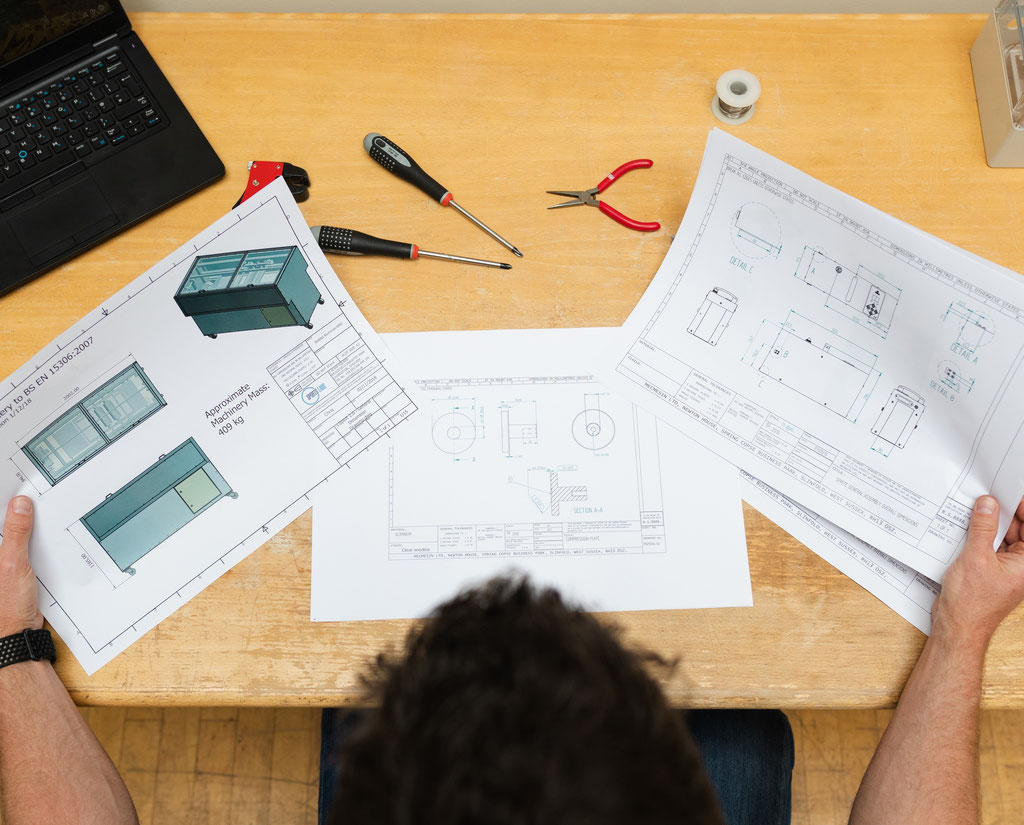
Image by This_is_Engineering from Pixabay