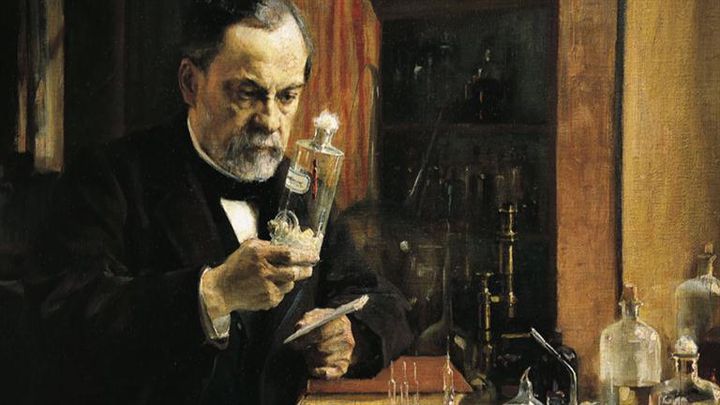
Before germ theory gained recognition in the mid-nineteenth century most medical practitioners believed that illness was primarily caused by bad air (referred to as "miasma"), stale blood, and abiogenesis, not to mention supernatural theories which assumed sickness was consequence of moral failings. You might notice none of these fall into a typical walk-in clinic diagnosis anymore, to be sure.
One of the first people to question these widely-held beliefs was Ignac Semmelweis. And this certainly set him apart from the crowd. In 1847, Dr. Semmelweis discovered that many deaths related to childbirth could be prevented through the simple act of handwashing (at the time it was common for physicians to deliver children shortly after handling corpses and ill people. Imagine!)
Instead of celebrating his theory and its substantiating evidence, the medical community berated and basically ejected Semmelweis. The reason? Because "death was a matter of the individual patient--it was preposterous that so many patients could suffer from a singular cause [physician-based contamination.]" With near unanimity, the medical community told Semmelweis that death was purely the result of individual circumstances, and he was fundamentally wrong.
Were you hoping for a ending full of victorious redemption? Sorry, this was a pretty miserable period in history, and deemed mentally unwell by his peers and his wife, Semmelweis was committed to an asylum in 1865 where he died within the month.
It’s hard to know what is more disturbing: the mistreatment of Semmelweis, the fact that bacteria had been first observed 200 years earlier, or that germ theory did not gain traction until after Pasteur had patented his technique to fight the diseases affecting the taste of wine in 1865.
Diseases and Memes
Memes are commonly understood as: “a humorous image, video, piece of text, etc.”. But, scientifically, a meme is more general. Initially described in the book The Selfish Gene as “an idea, behavior, or style that spreads from person to person within a culture”... like a virus.
Yet, in 21st century America, neoliberal ideologies based in “individual responsibility” and “self-determination” shape popular concepts regarding the health and development of individuals.
Similar to Semmelweis’s peers, when confronted with the possibility that mental illness and social ills might be the result of environmental conditions, popular opinion responds: “It is a matter of the individual."
We exist in world where videos, hashtags, and images can “go viral”--impacting more than 5 million people in less than a week-- yet the perception of individualism persists.
We use a virology term to describe our media… “Yet, people are individuals… responsible for their own choices?"
It is imperative that we understand human behavior is the result of contextual stimuli-- especially things as deceptively simple as “memes."