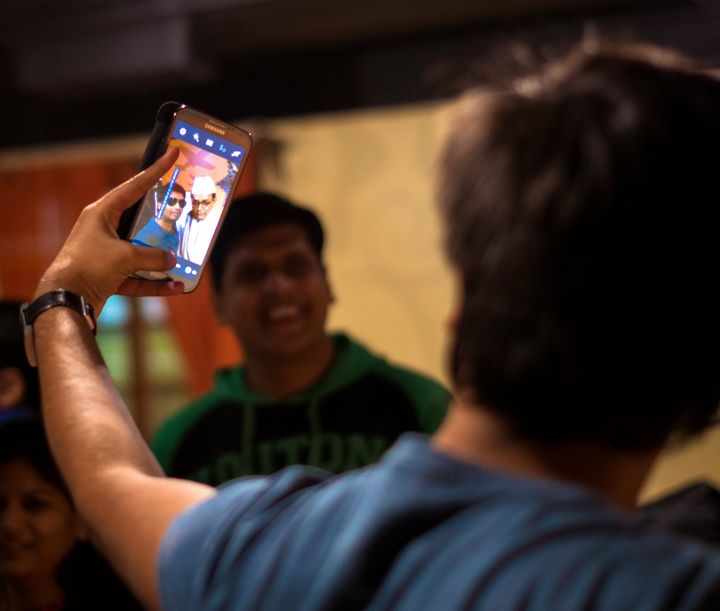
Ah, the selfie. Popularized by Ellen Degeneres and President Barack Obama, it's a popular way for people to show where they are at a particular time. Just hold the phone up to your face and snap a photo, perhaps arm-in-arm with a few friends or standing with a group behind you.
It's a great tool to show off get-togethers or unique vacation destinations, but some companies are looking for ways to exploit the idea to create revenue. The "selfie sticks" that were recently banned at all Smithsonian institutions are an example; these are devices where cell phones rest at the end of a long (collapsable) pole so that you can take a picture of yourself from way up high or way down below. The Smithsonian's concern, however, was a selfie stick might inadvertently into an artifact.
There are similar concerns -- albeit more from a technology perspective -- for a new idea called "pay by selfie." Last month, Jack Ma, the CEO for Alibaba Group, unveiled the idea at the annual CeBit tech exhibition in Germany.
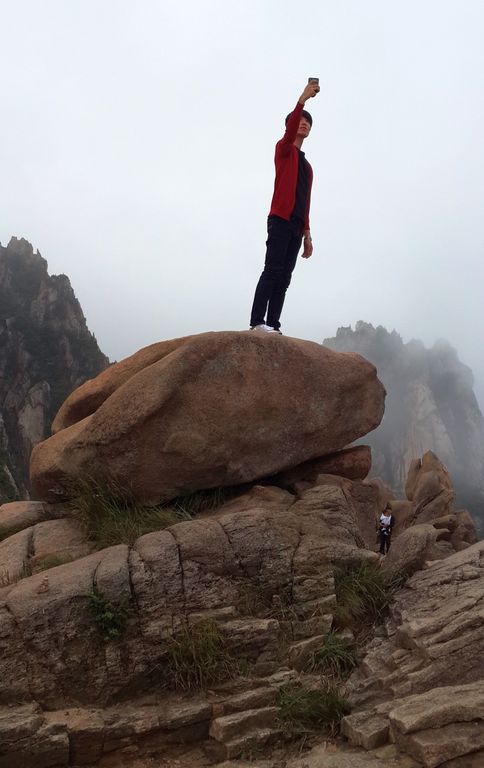
There are certain situations where it is appropriate to take selfies with caution. Credit: Wikimedia Commons
"The app validates mobile payments by matching a photo taken by the user at the point of purchase to a stored profile photo," Fortune wrote of the technology. "In Ma’s case, he used it to buy a commemorative stamp from the 1948 Hanover trade fair via Alibaba’s e-commerce site, according to the South China Morning Post."
The technology sounds neat on the surface, but at least a few industry analysts are concerned about the security. In an article for Forbes, Joseph Steinberg noted there is not much protection available for fraud (although he acknowledged there is not much public information available yet on Alipay's technology.)
"At the entrance to a building, for example, a guard and security cameras would see if someone were holding up a picture rather than approaching a scanner in person. On a phone, however, no such protection exists," he wrote, adding. "If a criminal were to gain access to someone’s phone -- either by stealing it or finding it after it is lost -- the odds are pretty good that he or she could obtain a high resolution image of the user either directly from the phone, or by doing a search online with the user’s information obtainable from the phone."

With cell phones being ubiquitous, merchants are looking for new ways to hop on the technology. Credit: Wikimedia Commons
It's a good question. With numerous apps available on phones these days to pay direct to merchants, perhaps the selfie technology is almost an unneeded tool given there are so many other methods of verification. If the selfie must be used, it would be best to pair it with tools such as a PIN number -- something that is growing in popularity for even simple credit card swipes -- to reduce the incidence of fraud.
There's little more information available about the technology since the launch, but it's a sure bet that if one company is talking about it publicly, many others are interested. It sure is handy to have cell phones everywhere that can be used for payments, but on the other hand security must always come first.
What do you think is the best way to address this dilemma?
Top image: We use selfies to document great times with friends. Some companies are now considering using this for payments. Credit: Wikimedia Commons