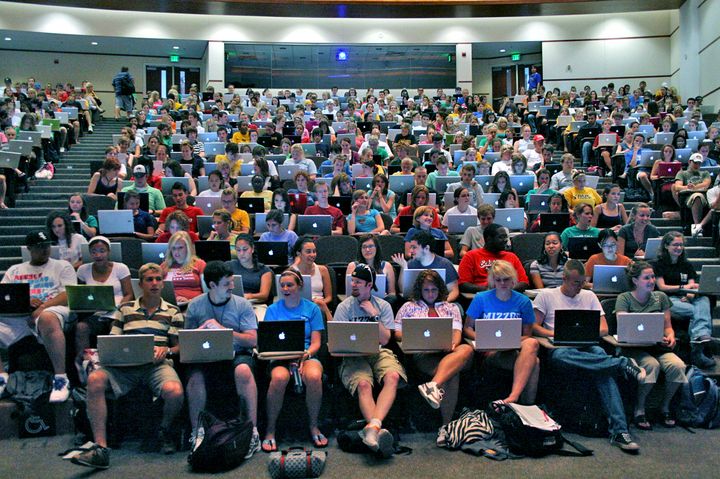
Is technology a help or a hindrance in the classroom? The debate often remains polarized by sides. There are those professors that swear that it is nothing but a distraction, that students will inevitably check social media during lectures instead of listening to the professor.
And then there are those that insist that technology is the way for education to move forward. By integrating videos, instant polls and other tools in the classroom, students take advantage of an environment they do know -- computers and the Internet -- to make sense of a subject they may not be as familiar with.
In Regina, the capital city of Canadian province Saskatchewan, a school board has allowed elementary school students to not only bring smart phones with them into class, but also to use them as part of the instruction.
"Mobile technology, now, has been around for a while. It's one that has a lot of potential because they're a person-device. Kids, staff, people generally use the device and build and provide or add the tools that work for them."
Teachers also argue that technology is a way of helping all students in a lecture. While there are those that benefit from just listening to a teacher, technology allows all sorts of different learning styles to come in.
“Consistently lecturing, that’s very, very difficult for students to stay attentive throughout a 75-minute lecture,” said Mark Morton, the senior instructional developer of educational technologies at the University of Waterloo, in an interview with the Globe and Mail. “Or at least, it advantages some students who have that kind of attention and disadvantages others. Trying to create different kinds of learning activities can benefit everybody.”
But a huge question goes unaddressed by this debate -- what about the students who can't afford the technology? Who can't work on assignments outside of school that require it? If schools are willing to integrate technology into their environments, they must also find the funding and the means to give students access even outside class hours -- whatever it takes.
Have a great idea to improve tech use in classrooms? Let us know by launching a HeroX challenge.
Top image credit: Wikimedia Commons