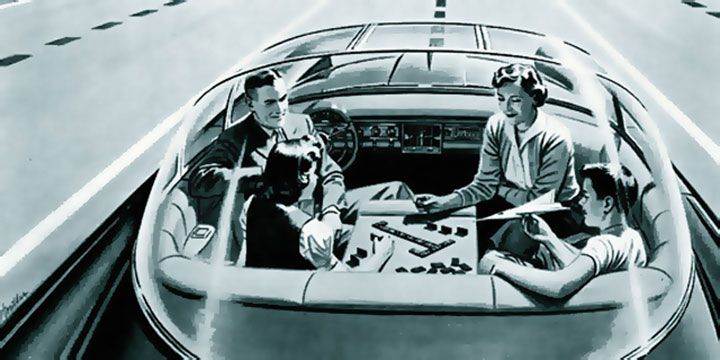
I didn’t learn how to drive like most people did at age 16. For whatever reason, I did not have the inclination at the time. There were other – more important – activities, like reading comic books and playing video games. And as soon as I moved to a city that was ably served by a great public transit system, I had even less inclination.
It wasn’t until I started spending time in California that I realized I really did need a license. California is called the Golden State. It should be called the Automobile State. In California, an illegal alien with a car will have an easier go of it than a legal resident without a car. I’m not exaggerating.
And so it was, at the age of 29, I finally bit the bullet and learned how to drive a car. I bought a friend’s car and – I’ll be honest – I didn’t take good care of it. It was a luxury that I didn’t truly appreciate. That car died. Or, I should say, I drove it to death. And since I was still living in a city ably served by public transit, I also let my license lapse.
So now, here I am, 44-years-old, with a downtown lifestyle and a bicycle I’ve owned for 13 years.
Maybe I should move to the UK where the government just announced that autonomous vehicles will be on public roads as soon as January 2015. The UK Department for Transport has created a £10m fund to test autonomous vehicles in 3 cities. A review of their Highway Code has been ordered. They seem to be pretty serious about this.
The cities have not yet been decided upon so if you are a municipal representative in the UK and want driverless cars in your city, you have until October to get your dibs in.
If your city is selected, expect a visit from me. I will be driven around your city all day in a driverless car as I casually read some Uncanny X-Men back issues in the seat usually reserved for the driver. Now if you could just turn the roof into a glass bubble top and make all vehicles sound like the Jetson’s car, I’d be really happy.