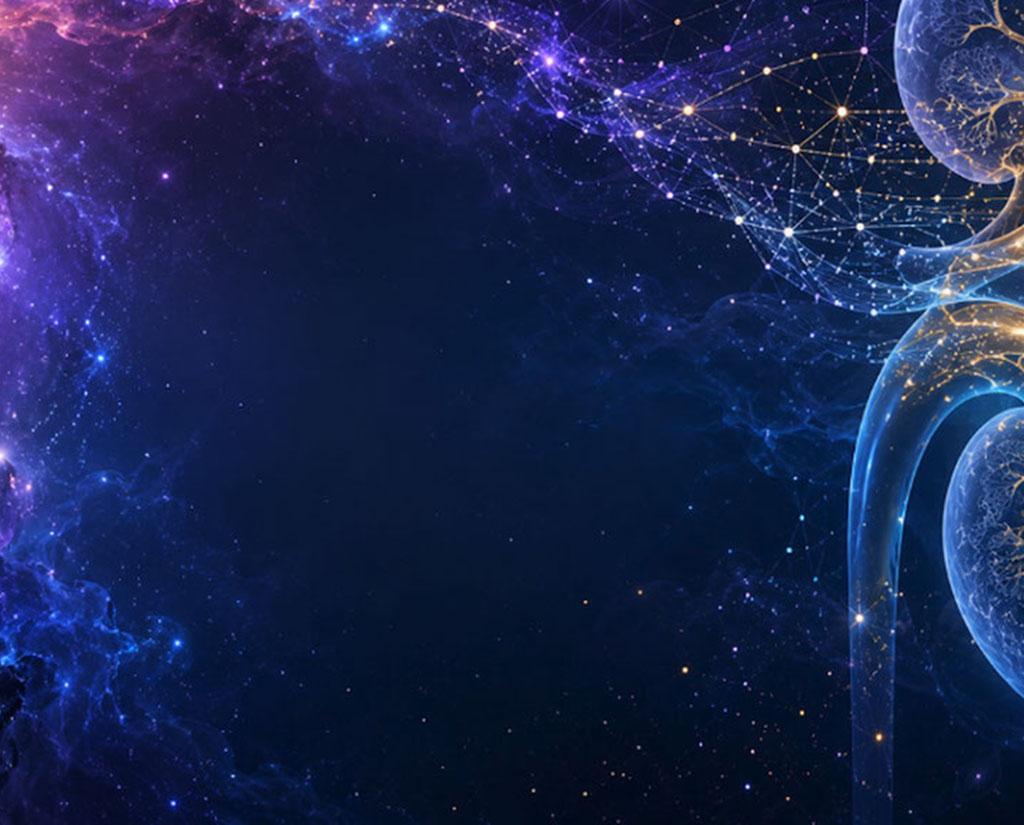
We live in a golden age of exploration. Telescopes around the world and in orbit are constantly capturing breathtaking views of the cosmos, gathering vast treasuries of knowledge. The real magic happens when we look closely enough to see what's hidden inside.
For 35 years, the Hubble Space Telescope has quietly recorded the beauty and mystery of the universe. Its massive archive, the Hubble Legacy Archive, contains detailed images featuring stars, distant galaxies, and phenomena beyond our current imagination. Countless potential discoveries are waiting for someone to ask the right question: what wonder might be hiding right here?
Asking that question opens up incredible possibilities. Combining human curiosity with modern artificial intelligence allows us to explore vast archives faster than ever before, paving the way for groundbreaking scientific discoveries across multiple fields.
The Archive Problem
Every single Hubble image captures extraordinary detail. Even when targeting a single star or galaxy cluster, these rich exposures record thousands of intriguing background objects. This vast abundance of observational data holds immense untapped scientific potential.
While expert astronomers can only review a tiny fraction of these millions of images manually, new tools offer an incredible opportunity. Rather than letting precious data sit unexamined, we can empower collaborative networks of technology and human brilliance to inspect every single frame.
This exciting frontier extends far beyond space exploration. Fields like medical imaging, oceanography, industrial research, and genomics are sitting on rich datasets ripe for discovery. Every growing archive represents an open door to new breakthroughs.
The Wonder of the Unknown
The most thrilling discoveries are often the ones we didn't expect to find. When machine learning models are designed intelligently, they don't just find what we already understand; they shine a spotlight on the unknown. They can help us spot merging galaxies caught mid-collision, gravitational lenses bending light across space, and exotic structures never before seen.
By combining smart algorithms with human wisdom, we can sift through background noise to pinpoint genuine marvels. Finding these rare gems is a thrilling journey into the unknown that unites human instinct and computer intelligence.
A Triumphant Step Forward
In early 2026, ESA researchers David O'Ryan and Pablo Gómez proved just how powerful this approach can be. Using an innovative tool called AnomalyMatch, they surveyed nearly 100 million image cutouts from the Hubble Legacy Archive. By blending semi-supervised and active learning, the system highlighted the most promising candidates for review.
In just two and a half days, the tool surfaced over 1,000 extraordinary objects including over 800 brand-new discoveries. Scientists celebrated finds like vibrant star-forming galaxies, rare jellyfish-like systems trailing brilliant gaseous arms, and edge-on planet-forming disks. It was a victory for collaborative discovery!
This achievement highlights a triumphant recipe for discovery. It’s one that pairs intelligent automation with the power of human intuition:
- Semi-supervised learning: empowers models to recognize potential wonders using only a handful of examples, unlocking huge potential across millions of unlabeled images.
- Active learning: sharpens accuracy over time, continuously guiding human focus toward the most exciting possibilities.
- Human curiosity stays at the heart: experts and passionate explorers verify the findings, turning potential data points into verified milestones of human knowledge.
The Next Frontier Needs You
Just as advanced models sift through light-years of astronomical data to reveal hidden celestial phenomena, these same AI techniques offer immense potential for medical research. By adapting these exact methods to biomedical imaging, researchers can analyze complex kidney scans to uncover subtle structural patterns and early biomarkers that might otherwise go unnoticed.
The power of crowdsourced problem-solving and AI means that anyone with passion and curiosity can contribute to expanding human knowledge. Together, we can make sure no hidden discovery remains in the shadows in the far reaches of space or within human biology.
Are you ready to make history? Join the movement and help solve one of science's most inspiring frontiers. Sign up today for the Kidney Artificial Intelligence Discovery Challenge: From Nebulae to Nephrons and be a part of the next big breakthrough!