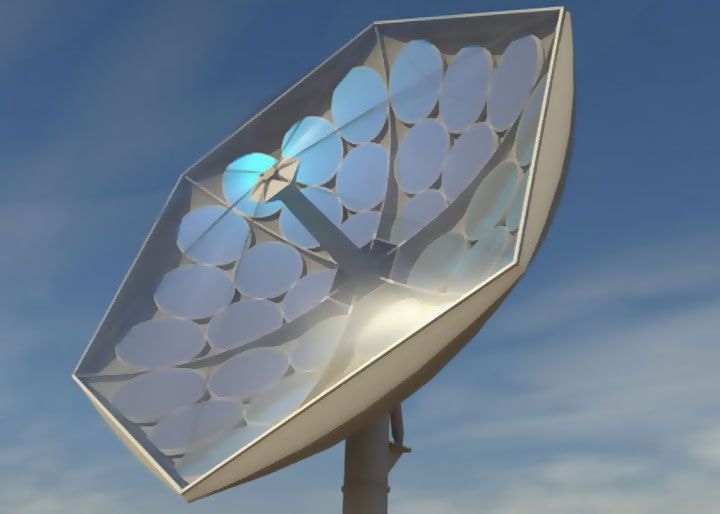
Sometimes, I come along something that makes me think, “I can’t believe we weren’t already doing that.” Hindsight is truly 20/20.
It’s usually simple things too. Simple, easy, basic ideas applied to seemingly complex systems. Often, it’s something at which we were already excelling in another sector of industry or society.
For instance, take a look at this.
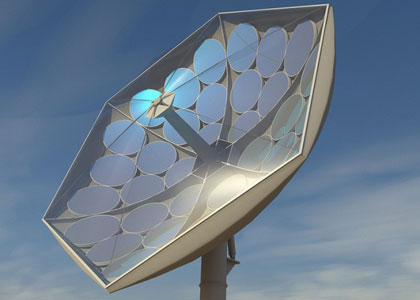
This is a new kind of solar energy collector being developed by IBM Research.
It looks an awful lot like one of these.
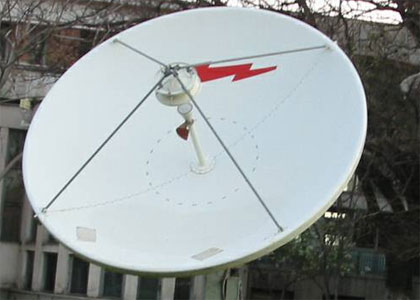
And one of these.

But while the satellite dish and parabolic mic amplify wavelengths useful for communications, IBMR claims their solar dish can amplify the amount of sunlight absorbed by a factor of 4x that of standard solar panels.
If those measurements are accurate, this could be a huge leap forward for the commercialization of solar energy. And it would be the result of someone simply taking the flat lines of a solar panel and bending them at the middle to form a concave collector. Optics are everything? Indeed.
Working with Airlight Energy, ETH-Zurich and Interstate University of Applied Sciences Buchs NTB, IBM Research plans to have a prototype ready this year in order to begin production next year.
This leaves me wondering, “What other complex problems exist out there that can be so simply addressed as bending a line into a curve?”