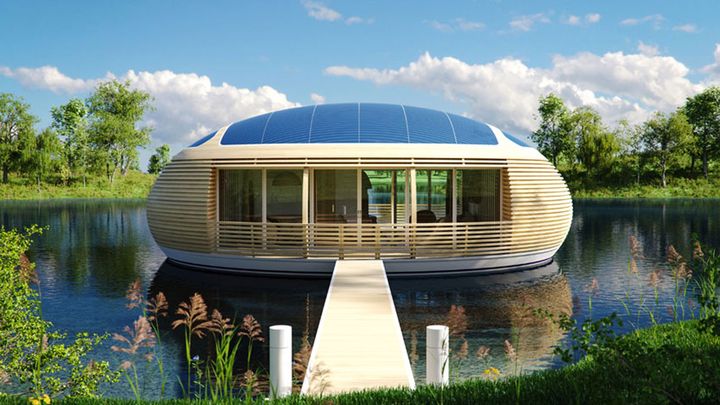
If you’ve ever pondered the idea of living on a houseboat but found the idea a little too “boaty” for your tastes, perhaps there’s a more fashionable alternative. Italian architect Giancarlo Zema, who has a reputation for dreaming up insanely extravagant mega-yachts and exotic underwater resorts, has teamed up with London-based EcoFloLife, a firm that specializes in “eco-friendly floating structures,” to create a 1,000 square foot energy-efficient floating home made from recycled wood and featuring a recycled aluminum hull. The overall design aesthetic: more house and less boat.
Waternest 100, as it’s called, stresses sustainability. As the company declares, “The world around us is becoming increasingly chaotic and conformist, requiring fully eco-friendly and recyclable housing units which allow us to live in complete independence and in harmony with nature while respecting and admiring it. The ongoing climate changes and the resulting sea- and river-level rises force us to ponder on the eco-sustainability of our housing choices.” In other words, one way to protect the Earth may be to step off it and reside instead on the 70 percent that isn’t dry land.