Beneath the surface of embankment dams, hidden cracks can form: invisible to examiners, difficult to detect by routine monitoring, yet capable of contributing to internal erosion, one of the leading historical causes of embankment dam failures. These cracks may be only millimeters wide and buried dozens of feet deep, but they can cause seepage to concentrate. Even barely perceptible cracks could quietly compromise structures that millions of people depend on for water, power, and flood protection. Existing geophysical methods are not always effective for resolving these narrow features, especially in the clayey and silty soils where cracks most often occur. Reclamation is looking for a better way… and that's where you come in.
This three-phase challenge invites geophysicists, sensing specialists, nondestructive testing experts, and creative problem-solvers (including AI/ML practitioners) from any field to develop novel methods for detecting subsurface cracks in embankment dams. You'll start with a concept paper, advance through prototype development and validation, and demonstrate your solution under conditions that reflect real embankment environments. Up to $400,000 in prizes is available, along with the opportunity to shape the future of dam safety across the American West. Ready to crack the case? Click Follow, explore the guidelines, assemble your team, and show us what you can find.
Guidelines
Background
For over a century, the Bureau of Reclamation (Reclamation) has shaped the infrastructure of the American West. As the nation's largest wholesale water supplier, Reclamation manages more than 330 reservoirs that collectively store over 140 million acre-feet of water, delivering this critical resource to support agriculture, energy generation, ecosystems, and growing communities across 17 western states. Many of these reservoirs are impounded by embankment dams: massive earthen structures that rely on careful material placement and compaction to safely retain water over decades of service.
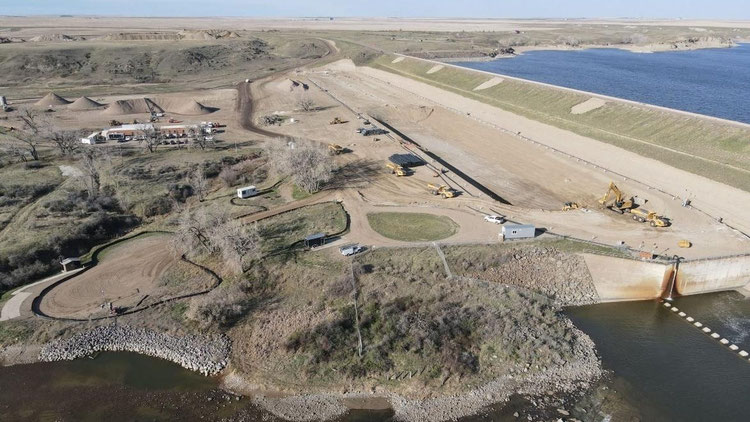
Embankment dams are among the oldest and most common dam types in Reclamation's inventory. Many embankment dams (Image 1 illustrate a typical example) function by creating a low-permeability barrier, typically compacted clay or silt, that limits seepage through the dam body but does not prevent it entirely. Some embankments feature distinct internal zones, while others are more homogeneous. This design makes embankment dams inherently vulnerable to any discontinuity, such as a crack, that could create a preferential flow path through the structure.
Image 1: Embankment dams such as this one in Idaho must be able to safely retain water for decades; source: usbr.gov
The Problem
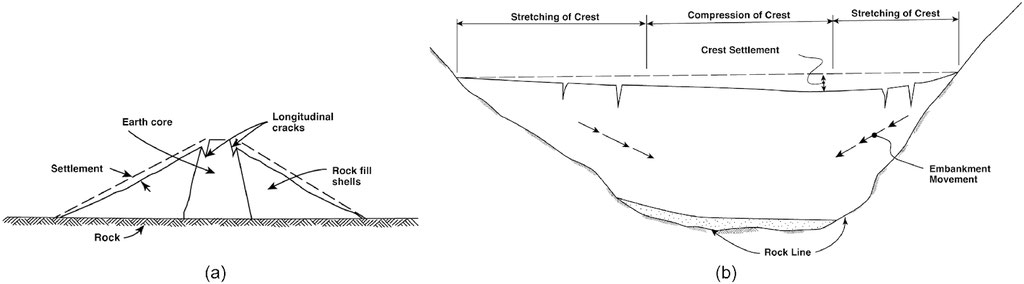
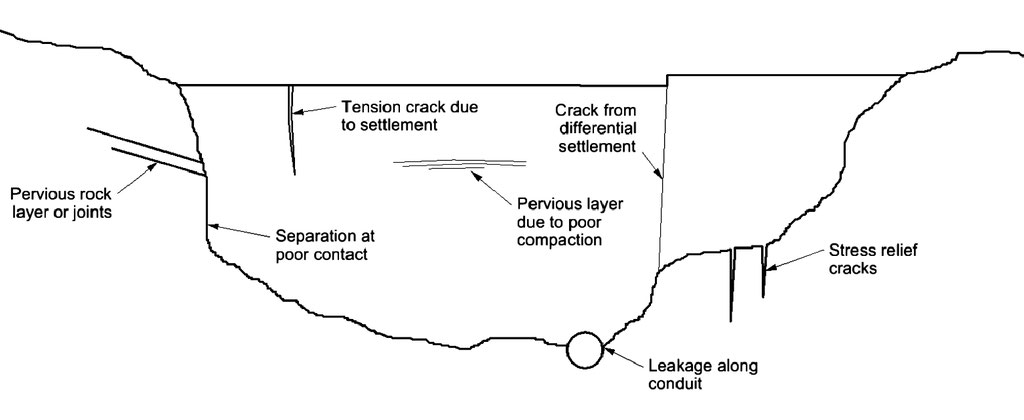
Many embankment dams were constructed without removing compressible foundation materials or leveraging modern measures meant to limit settlement. Over time, differential settlement, transitions between compressible and rigid foundations, hydraulic fracturing in low-stress zones, and structural interfaces can all create subsurface cracks within the embankment. Cracks oriented parallel to the crest are known as longitudinal, while those perpendicular to the crest are transverse. Transverse cracks are especially concerning because they can form continuous seepage paths from upstream to downstream.
These cracks can be a few mm to 10s of centimeters wide, near the crest or 100 plus ft below the surface of the embankment; under saturated conditions or above the water table. This challenge is seeking a method(s) to detect, identify and locate these cracks within an embankment.
Figure 1: Longitudinal cracking (a) and transverse cracking (b) in an embankment dam.
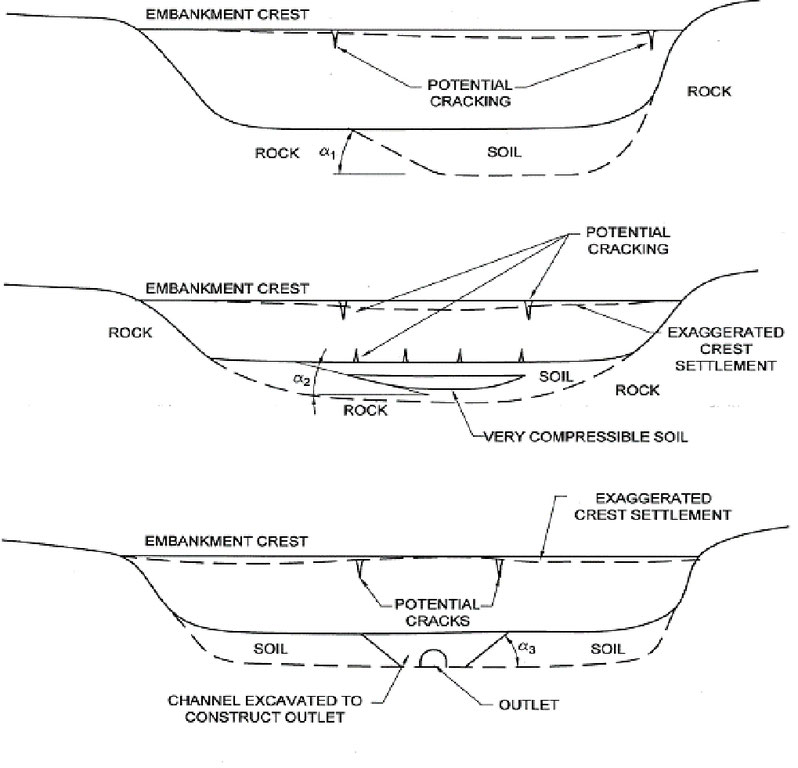
Figure 2: Potential causes of transverse cracking due to foundation conditions.
Even cracks with very small openings can concentrate seepage and provide a pathway for internal erosion, one of the leading historical causes of embankment dam failure. Cracks located higher in the embankment pose additional risk because flood loading can wet zones that have never been tested hydraulically. Many such cracks do not appear at the surface, are obscured by vegetation, or self-seal at the surface while remaining open internally, making them extremely difficult to detect with traditional inspection methods.
Based on documented case histories (of dams where cracking has been observed and studied), transverse cracks commonly occur where:
the foundation materials transition from compressible to incompressible, for example at the abutments or around conduits;
wide foundation benches exist beneath an embankment;
an embankment interfaces with rigid structures, or;
hydraulic fracturing occurs at low stress zones caused by compaction difficulties during construction, for example at steep-walled trenches or narrow valleys.
The physics and mechanics that drive cracking of embankment dams is well understood. However, it remains difficult to successfully detect actual cracks, even in areas where conditions are conducive to their formation.
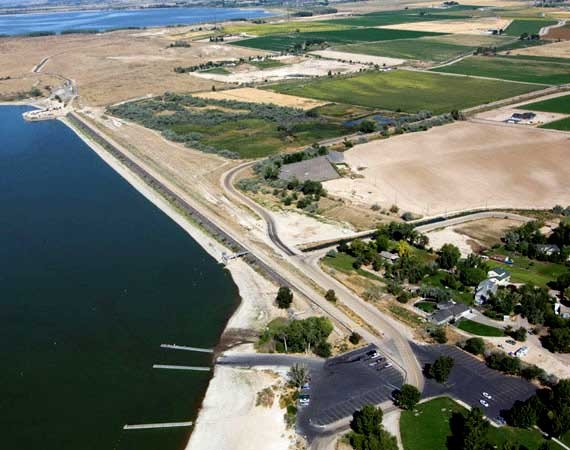
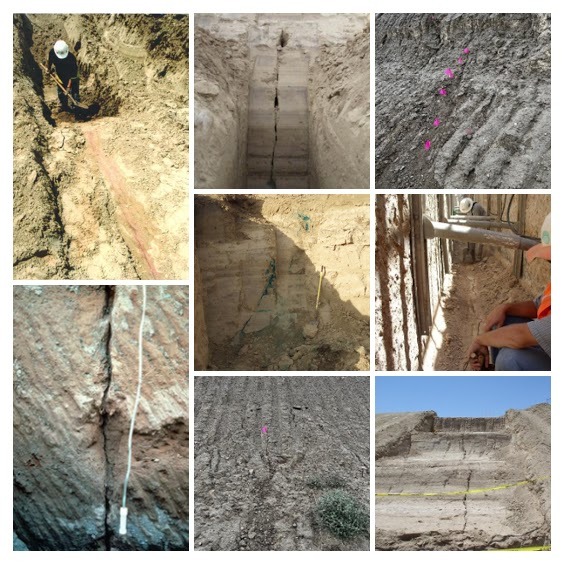
Image 2: Cracks in embankment dam soils in location where cracks were suspected and excavated for confirmation. This approach is considered invasive because excavating into or near a dam poses its own risks, that must typically be mitigated through reservoir and operational restrictions. Furthermore, these types of invasive investigations do not always yield a definitive way to rule out the possible existence of a crack.
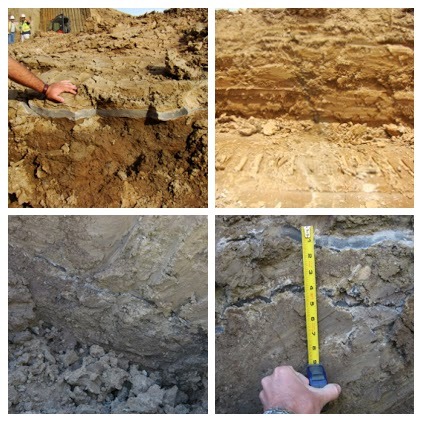
Image 3: Grout (grey-colored layers) filled cracks in embankment dam soils.
While measuring soil settlement during and after construction can help engineers understand the potential for cracking, cracks are rarely observed at the ground surface even in cases with large amounts of differential movement. Visual inspections can identify and monitor cracks that manifest on the surface. However, visual inspection may not reveal surface cracks if obscured by vegetation or infilling. Cracks within an embankment with no surface expression are particularly problematic as they can be difficult or impossible to detect. Dam owners may spend a significant amount of time and money repairing a structure because cracks are assumed to exist. Existing methods cannot reliably confirm or rule out the presence of subsurface cracks. Unfortunately, this means the lowest risk option may be to assume they could be present and perform proactive repairs.
This is why the dam safety industry needs help finding these types of cracks before they cause a problem.
Deployment and detection efforts are complicated further by interference from cultural (man-made) features present on or within embankment dams. Buried utilities, conduits, drainage systems, monitoring instrumentation, metal reinforcement, riprap, and other infrastructure can generate signals that obscure or mimic those from subsurface cracks. These cultural markers are particularly problematic for geophysical methods such as electrical resistivity tomography, ground-penetrating radar (GPR), and electromagnetic surveys, which may struggle to distinguish between anomalies caused by cracks versus those caused by utilities, metal objects, or other installed features. Any effective detection method must be able to operate in the presence of such interference or clearly differentiate between cultural features and actual structural defects.
Understanding of the Current Solution Landscape
Reclamation commonly uses tools such as electrical resistivity tomography, seismic refraction, seismic surface wave methods, GPR, and electromagnetic conductivity. While valuable, these methods detect primarily macro-scale changes in stiffness or density and often cannot resolve narrow, discontinuous, or deep cracks.
The competition seeks novel or significantly improved detection approaches, or combinations of approaches, that can detect or reliably rule out the presence of subsurface cracks in clayey or silty embankments.
The Challenge
Through this multi-phase challenge, teams will embark on a structured journey that moves from concept to development and ultimately to real-world demonstration. In Phase 1, teams will articulate and frame their solution approach and execution vision. During Phase 2, selected teams will detail and validate their designs. Finally, in Phase 3, the selected teams will demonstrate the most promising solutions in conditions that reflect real embankment dam environments. Each phase intentionally builds on the last, increasing in technical rigor and realism while maintaining focus on practical deployment and impact. Together, the phases are designed to support teams in transforming strong ideas into credible, implementable solutions that advance the state of embankment dam crack detection.
Phase 1 Concept Paper Submission
In Phase 1, you will submit a 12-page maximum concept paper describing your proposed solution and your team’s ability to carry it forward through design, development, and demonstration in later phases of the challenge. This submission should clearly articulate what you propose to develop, why it addresses the challenge problem, and how your team would realistically execute the work if selected to advance. Phase 1 focuses on evaluating early-stage ideas, but this challenge emphasizes implementation. Reviewers will look for proof that your approach is practical, technically sound, and backed by a capable team. Your concept paper should therefore balance innovation with practicality, demonstrating both the strength of the solution itself and the readiness of your team to progress into Phase 2 and Phase 3 activities.
Your Phase 1 concept paper should present a coherent, end-to-end description of your proposed solution for detecting and locating cracks within embankment dams, along with a clear rationale for why your approach is technically sound, feasible to implement, and appropriate for further development in later phases of the challenge. The paper should describe the underlying detection methodology, the physical or environmental conditions under which it is intended to operate, and how it addresses the specific challenges associated with embankment dams, particularly those with clayey and silty cores (an example of an earthen core can be seen in Figure 1). In addition to the solution concept itself, your narrative should explain how the system would be deployed and used in real-world settings, the types of outputs or insights it would generate, and the anticipated path from the proposed Phase 1 concept through development, testing, and demonstration in Phases 2 and 3. Throughout the paper, teams are encouraged to balance innovation with practicality, making clear assumptions explicit and grounding the proposed work in relevant experience, prior work, or analogous applications where appropriate.
Technical Scope and Performance Considerations
Solutions should be informed by the physical and operational realities of embankment dams, including variability in soil composition, moisture conditions, and access constraints. Reclamation seeks approaches that significantly improve current inspection methods and can be feasibly deployed and scaled across various embankment settings.
Must-Have Technical Capabilities
To be competitive in this challenge, solutions should demonstrate the ability to:
Detect and locate transverse and longitudinal cracks within embankment dams; better accuracy and precision will increase competitiveness.
Operate effectively at homogenous or zoned embankment dams. Some dams consist almost entirely of fine-grained materials, while others have different zones of earthen material which range from clay to gravel.
Detect subsurface cracks that are not detectable by the human eye, with the expectation that deeper detection capability strengthens competitiveness, even if the full aspirational depth is not achieved.
Desired Capabilities and Features
The following characteristics are advantageous and may strengthen a submission but are not required in Phase 1:
Capability to detect cracks at depths approaching 50 feet below the ground surface, particularly when coupled with higher resolution at shallower depths.
Enhanced spatial resolution near the surface or within critical embankment zones.
Deployability in both above-water and underwater environments.
Operability on both upstream and downstream embankment faces.
Operability across diverse ground surfaces such as soil, asphalt, and riprap.
Flexibility to adapt the system for broader deployment scenarios or expanded operating conditions in later phases.
Assurance that invasive solutions will not harm the embankment.
Ability to assess and provide detailed information on the extent and interconnectedness of identified crack(s).
Teams are encouraged to describe clearly the technical assumptions, constraints, and intended operating envelope of their proposed solution, including any limitations, trade-offs, or phased development pathways. Submissions may focus on specific use cases or environments in Phase 1, as long as there is a clear path to broader applicability in later phases.
Phase 2: Solution Development and Validation
Teams selected to advance to Phase 2 will refine and validate their proposed solutions, progressing from a concept to a more developed, testable system. Phase 2 will focus on refining the technical approach, addressing risks from Phase 1, and proving feasibility through analysis, modeling, prototyping, or testing. Teams will define system architecture, performance goals, deployment plans, and operational factors for embankment dam environments, considering materials, site constraints, and cultural interference. The Phase 2 goal is to show technical confidence and evidence for Phase 3 demonstrations. Detailed guidance on scope, deliverables, and criteria will be provided at the Phase 2 launch.
Phase 3: Demonstration and Performance Assessment
Phase 3 will focus on demonstrating solutions in real-world embankment dam conditions. Teams will deploy their systems in representative environments, gather performance data, and evaluate effectiveness, reliability, and practical deployment. Activities may include field testing, pilot deployments, or demonstrations to assess performance across soil types, depths, and operational contexts. The goal of Phase 3 is to validate real-world applicability and provide insights for future adoption or scaling. Detailed requirements and success metrics will be shared at the Phase 3 launch.
How do I Win?
To be eligible for an award, your proposal must, at minimum:
Satisfy the Judging Criteria requirements.
Address the Submission Form questions thoughtfully
Score higher than your competitors!
Prize
Phase
Phase Description
Number of Winners
(Up to)*
Prize per Winner
Total Phase Prize
Phase 1
Concept Design / White Paper
7
$30,000
$210,000
Phase 2
Prototype Development & Self-Testing
5
$20,000
$100,000
Phase 3
Laboratory Demonstration
1st Place
$60,000
$60,000
2nd Place
$30,000
$30,000
Phase 3 Total
$90,000
Total Prize Pool
$400,000
*Number of prizes is subject to the number of eligible, high quality submissions received. Reclamation reserves the right to award any number up to the number (including 0) of prizes displayed.
*Milestones for phases 2 and 3 will be confirmed and announced to winners as those phases commence.
Judging Criteria
Criterion
Description
Weight
1) Technical Solution, Concept, Approach, and Performance
How well does the solution identify and locate subsurface cracks?
How credible is the rationale for detecting flaws?
How realistic is the solution for implementation on embankment dams?
How well can the solution evaluate the extent and interconnectedness of identified cracks?
30
2) Phase 2 Plan, Team Capability and Capacity
How sound is the team’s Phase 2 plan?
How well has the plan accounted for development, testing, data capture/analysis/and iteration?
How realistic is the plan within Phase 2 time and resources?
How well does the team demonstrate their expertise to accomplish all aspects of the plan?
20
3) Deployability Across Embankments in the Field
How well does the solution account for efficiency of deployment?
How well does the solution project to handle different environments, and variable surfaces?
How well does the solution consider access and above-water vs underwater operation?
15
4) Consideration of Interference and Site Constraints
How well does the solution/approach account for potential interference and other cultural markers?
How well has the team accounted for assumptions and thought through potential differences in varying sites?
15
5) Innovation / Novelty
How novel or clear of a demonstration of improvement over current methods is the solution?
10
7) Safety / Non-Creation of Vulnerabilities
How clearly does the solution avoid creating long-term seepage pathways?
How well does the solution avoid being invasive (i.e., drilling)?
How well has the team accounted for safety of deployment and operation?
10
8) Data Fusion / AI-ML Value (if used)
If the solution proposes AI/ML: Is it clearly tied to combining datasets for anomaly detection (not a black box)? Are inputs, training/validation strategy, and uncertainty reporting described at a credible level?
(5) (bonus)
Rules
Participation Eligibility:
Please review the Challenge-Specific Agreement for complete eligibility terms.
If you are a Federal employee, a Government contractor, or employed by a Government Contractor, your participation in this challenge may be restricted or prohibited.
Submissions must originate from either the U.S. or a designated country (see definition of designated country at https://www.acquisition.gov/far/part-25#FAR_25_003), OR have been substantially transformed in the US or designated country prior to prototype delivery pursuant to FAR 25.403(c).
Submissions must be made in English. All challenge-related communication will be in English.
You are required to ensure that all releases or transfers of technical data to non-US persons comply with International Traffic in Arms Regulation (ITAR), 22 C.F.R. §§ 120.1 to 130.17.
No specific qualifications or expertise in the field of geophysics or dam safety is required. Individuals and non-expert teams are encouraged to compete and propose new solutions.
To be eligible to compete, you must comply with all the terms of the challenge as defined in the Challenge-Specific Agreement.
Intellectual Property
Innovators who are awarded a prize for their submission must agree to grant the United States Government a royalty-free, non-exclusive, irrevocable, worldwide license in all Intellectual Property demonstrated by the winning/awarded submissions. See the Challenge-Specific Agreement for complete details.
You will be required to complete an additional form to document this license if you are selected as a winner.
Registration and Submissions:
Submissions must be made online (only), via upload to the HeroX.com website by April 30th, 2026 at 5pm ET. No late submissions will be accepted.
Selection of Winners:
Based on the winning criteria, prizes will be awarded per the weighted Judging Criteria section above and subject matter expert evaluation. All winner selections are final and may not be contested.
Judging Panel:
The determination of the winners will be made by HeroX & Reclamation based on evaluation by a team of relevant subject matter experts.
Additional Information
By participating in the challenge, each competitor agrees to submit only their original idea. Any indication of "copying" amongst competitors is grounds for disqualification.
Innovator is responsible for shipping prototype in Phase 3. International participants are required to manage all requirements regarding US customs for Phase 3 shipping of solutions. Prototypes will not be returned.
All applications will go through a process of due diligence; any application found to be misrepresentative, plagiarized, or sharing an idea that is not their own will be automatically disqualified.
All ineligible applicants will be automatically removed from the competition with no recourse or reimbursement.
No purchase or payment of any kind is necessary to enter or win the competition.
Feeling stuck? Have questions, thoughts, or ideas about the challenge so far, and need a place to take them? That’s what the Crack the Case forum is for.
The forum is a great way to gain insights and generate ideas about different aspects of the challenge. Use the forum to ask questions, help out your fellow innovators, and maybe even make a few friends along the way.
You can browse through the forum to see what people have already been saying. To ask a question, click “New Topic” and write out your message.
HeroX checks the forum regularly, so it’s a good way to touch base with us directly.
As of today, you now have access to the full guidelines of the challenge so you can begin working on your solutions.
To begin, click the “Solve this Challenge” button. Once you’ve accepted the legal agreement, you’ll be officially signed up as a competitor.
If you’re ever feeling stuck, the challenge forum is the first place to go. The forum is there for you to ask questions and seek advice. Bounce ideas around, get to know your fellow innovators, and maybe even form a team (more on that later).
Now get cracking! We can’t wait to see what you come up with.