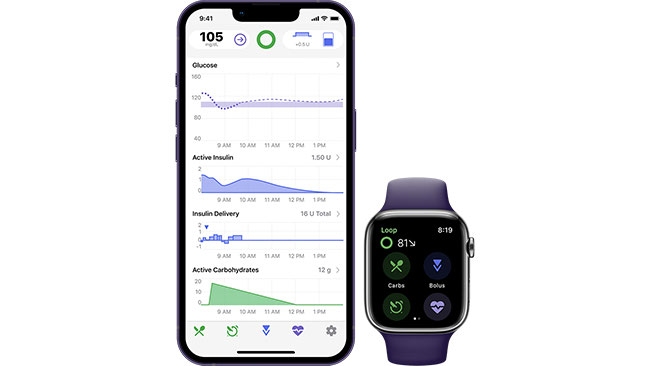
We propose a secondary analysis of the T1-DEXI dataset to investigate the nuanced effects of various physical activities on glycemic responses in people with Type 1 Diabetes. By examining both structured and unstructured exercise sessions, along with unplanned activities, we aim to identify patterns in insulin sensitivity and glucose variability influenced by activity type, intensity, and duration.
This research will enhance our understanding of the relationship between exercise and glycemic control in T1D patients. The insights gained are expected to support the development of adaptive algorithms for automated insulin delivery systems, ultimately improving health outcomes for individuals living with T1D.
Specifically, we will quantify the impact of common exercises—walking, running, biking, etc—on insulin sensitivity. This quantification will be translated into a streamlined shortcut within the Tidepool Loop automated insulin dosing system, enhancing user experience and health outcomes.
We propose a comprehensive secondary analysis of the Vivli T1-DEXI dataset to develop and validate activity-specific pre-configured presets for insulin adjustment during various exercise modalities in individuals with Type 1 Diabetes.
T1-DEXI represents a unique dataset to investigate the factors around the activity as it provides multiple observations, including both structured and unstructured exercise sessions, as well as unplanned activities, over a long period of time for 497 adult participants with T1D using MDI or insulin pump.
The project will analyze the glucose dynamics in the T1-DEXI dataset to understand how a static and dynamic activity-preset should be structured for improving primary blood glucose metrics such as hypoglycemia, hyperglycemia, and Time in Range. Specifically, the analysis will measure the effects on change in glucose during exercise from contextual information such as insulin on board and starting glucose in order to optimize control parameters that are activated during activity presets. Further, simulation of the T1-DEXI data will be used to validate and potentially further optimize these parameter selections.
Recognizing the complexity of optimizing insulin control parameters across different activities, this project aims to achieve three specific goals:
By leveraging the T1-DEXI dataset, our approach will enable personalized insulin dosing based on real-time glucose data and activity-specific presets. We will also create clinical training content for healthcare providers and individuals with diabetes, focusing on optimal insulin and carbohydrate management.
The proposal timeline for this project is 3 years:
Algorithm
Phase 1-2: Design static activity-specific preset based on T1DEXI unstructured real-world physical activity sessions for the 4 most frequent activity types
Phase 2-3: Design dynamic activity-specific preset based on all the important factors affecting glycemic effects of real-world physical activities
Clinical Study
Phase 1-2: Design of education plan with resources and materials available
Phase 2-3: Clinical evaluation of the static activity-specific presets integrated in Tidepool Loop
Research Findings and Expected Summary of Outcomes
The activity presets and algorithms developed in this project will facilitate safer exercise while optimizing a composite metric consisting of glycemia, carbohydrate intake and exercise intensity/duration. The project team will develop clinical training content, and implement recommended exercise modules within the Tidepool Loop app, and clinically validate these modules in a study.
Sharing Findings
All human data generated from this proposal will be mapped to CDISC standards and added to the Vivli platform so that the data is interoperable and can be combined with the original set.
All resources and educational materials related to the activity specific pre-configured presets will be made publicly available.
All designs and code for the FDA cleared version of Tidepool Loop, including the activity presets feature, will be assigned a highly permissive open source license, permitting other device and app makers to leverage this validated concept for activity management in their own commercial systems.
FAIR and CARE
We will adhere to the FAIR principles by ensuring that all datasets, algorithms, and research outputs are findable, accessible, interoperable, and reusable. We will provide comprehensive metadata and utilize open-access platforms to enhance discoverability and access. Additionally, clear documentation and permissive licensing will facilitate the reusability of our resources by other researchers.
In line with the CARE principles, we will engage stakeholders, including individuals with Type 1 Diabetes and healthcare professionals, to shape our research questions and outcomes, ensuring that the project benefits the broader diabetes community. Ethical considerations will guide our work, prioritizing patient safety and data privacy while promoting equity and collective benefit.
Replicability and Reproducibility
We will leverage the extensive T1-DEXI dataset, which includes diverse data from 497 adult participants with Type 1 Diabetes (T1D), providing a strong foundation for our analyses. Our transparent methodology will involve clearly defined analytical methods, including longitudinal linear mixed-effects models, detailed in project documentation to facilitate replication by other researchers.
We will employ standardized protocols for data processing and analysis, minimizing variability and supporting reproducibility across settings. All findings and methodologies will be made publicly available to promote transparency and enable further research. Additionally, results will inform clinical trials that validate our activity-specific presets, ensuring their applicability across diverse populations.
Engagement with the diabetes research community for feedback and peer review will further refine our analyses, enhancing the credibility of our findings. By implementing these strategies, we aim to foster an environment of collaboration and transparency in diabetes research.
Our study has the potential to fundamentally transform physical activity management in Type 1 Diabetes, empowering individuals to achieve improved glycemic control and overall health outcomes.
This research project augments what is currently availability in commercial systems with innovation that began in the DIY, open source community: activity presets. Through this research project, we will improve scalability of this novel feature by introducing activity-specific preconfigured presets, so the feature is understandable and accessible to a broad audience of people with diabetes, beyond those managing open source, DIY systems. Furthermore, we will validate this novel feature through rigorous clinical testing
The data collected from the T1DEXI study will also be used to derive and validate activity specific pre-configured presets, which are determined as follows.
New data will be generated during the clinical trial component of the project in year 2. The clinical trial will be a multi-site US clinical trial that will be broken up into different phases. Phase 1 will be a structured, supervised exercise study where we will be testing ~2-4 configured activity presets in Tidepool Loop v2.0 for common activities (e.g., walking, running, biking, resistance training). We will test this against a single exercise target (that only modifies glucose target) of Tidepool Loop v1.0. These configured presets will be selected based on the T1-DEXI data analysis and outcomes (e.g., most frequent activity type). Phase 2 will involve home use of the Tidepool Loop v2.0 system in real-world settings for six weeks.
These are the anticipated new data to be created through this project:
UNIVERSITY OF CALIFORNIA, SANTA BARBARA (UCSB)
Yao Qin: Prof. Qin at UCSB is a machine learning expert living with T1D for >11 years.
STANFORD UNIVERSITY
Rayhan Lal: Dr. Lal has lived with T1D for decades. He works with the Stanford Diabetes Research Center, industry, and open-source diabetes communities.
Dessi Zaharieva: Dr. Zaharieva has been living with T1D for over 25 years. She is a Certified Exercise Physiologist, Certified Diabetes Care and Education Specialist, and works as an Instructor in Pediatric Endocrinology.
UNIVERSITY OF TRENTO
Eleonora Aiello: Prof. Aiello is an Assistant Professor at University of Trento with research focus on design and development of algorithms for closed-loop automated insulin delivery.
TIDEPOOL (PALO ALTO, CA)
Kelly Watson: VP of Product and User Experience at Tidepool.
Brandon Arbiter: VP of Business Development and Strategic Partnerships has been living with T1D for 12 years and is a founding team member.
YORK UNIVERSITY
Michael Riddell: Prof. Riddell is an exercise physiologist and a world leader in the management of exercise in T1D. He serves as co-chair of the T1DEXi adult and peds working groups. Listed in Stanford’s top 2% of the most cited scientists worldwide, he will provide physiological and clinical guidance for these studies.
DEXCOM
Tomas Walker: Dexcom provides a letter of support for this study.
[REDACTED INSULIN PUMP COMPANY]
Chief Medical Officer: [Redacted insulin pump company] provides a letter of support for this study.
Tidepool is collaborating with the world’s leading experts in the field of exercise and Type 1 Diabetes. In particular, our clinical collaborators include Michael C. Riddell, PhD (Professor and Graduate Program Director, School of Kinesiology and Health Science, Muscle Health Research Centre, York University), Dessi Zaharieva, PhD, CEP, CDCES (Center for Academic Medicine, Division of Endocrinology & Diabetes, Stanford University, School of Medicine), and Dr. Rayhan Lal(Assistant Professor of Medicine, Endocrinology and of Pediatrics at Stanford University). Dr. Riddell and Zaharieva are recognized internationally for their leadership in this field, and led the initial clinical investigation that collected the Vivli dataset we are now using for secondary analysis.
Tidepool has been developing leading medical device software in the diabetes space since 2013. This project will be additive to the FDA-cleared Tidepool Loop product as a second generation device.