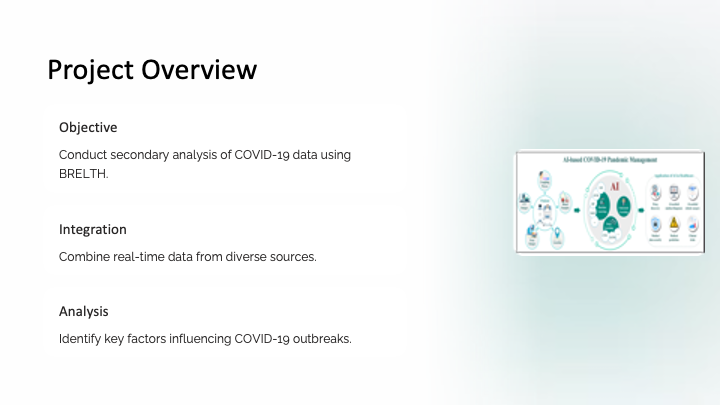
This project uses the BRELTH biosurveillance platform to conduct a secondary analysis of COVID-19 data, integrating real-time data from public health records, environmental sensors, social media, and news reports with datasets from GREI-associated repositories. The analysis aims to identify key factors, such as population density and public health interventions, that have influenced the severity of COVID-19 outbreaks. BRELTH's AI-driven analytics will develop predictive models to forecast future outbreaks, enabling proactive public health responses. The findings will inform evidence-based policy recommendations, enha
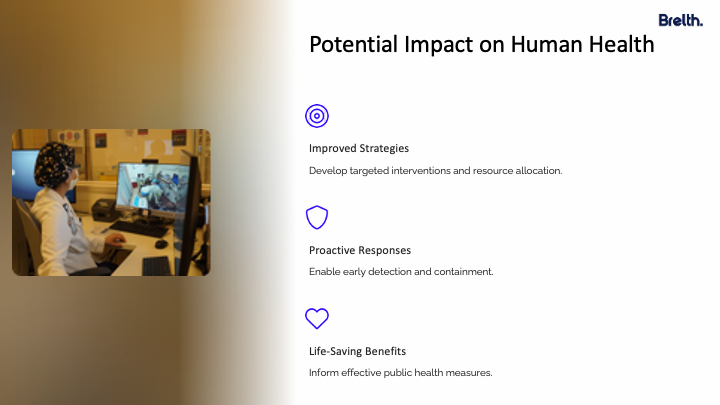
 ncing public health strategies and potentially saving lives through targeted interventions.
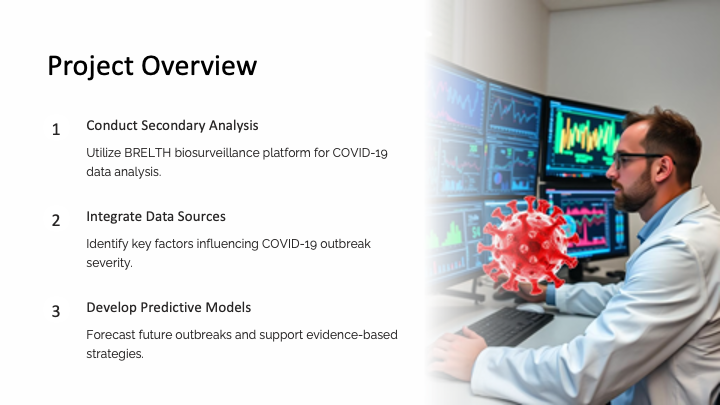
This secondary analysis project aims to enhance the understanding of COVID-19 outbreak dynamics by leveraging the capabilities of the BRELTH biosurveillance platform and integrating data from the Generalist Repository Ecosystem Initiative (GREI). The analysis will identify critical factors influencing the severity of COVID-19 outbreaks, develop predictive models for future outbreaks, and provide evidence-based policy recommendations to improve public health strategies.
Data Utilization
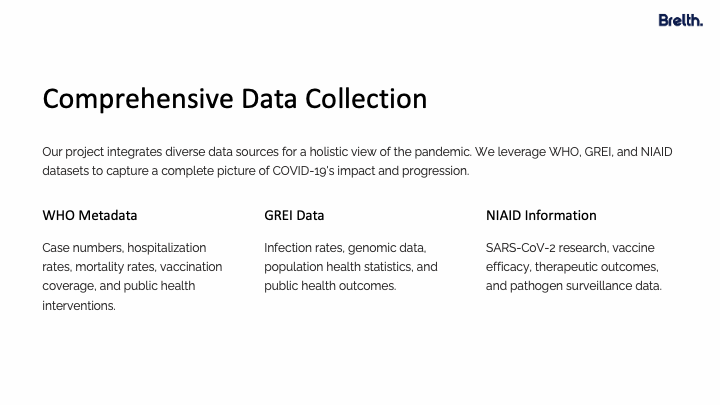
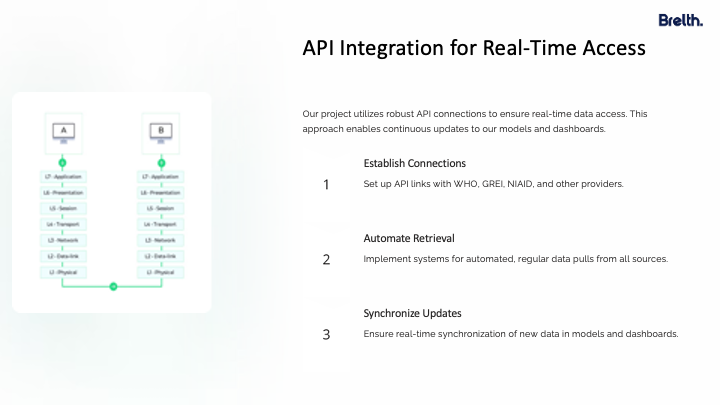
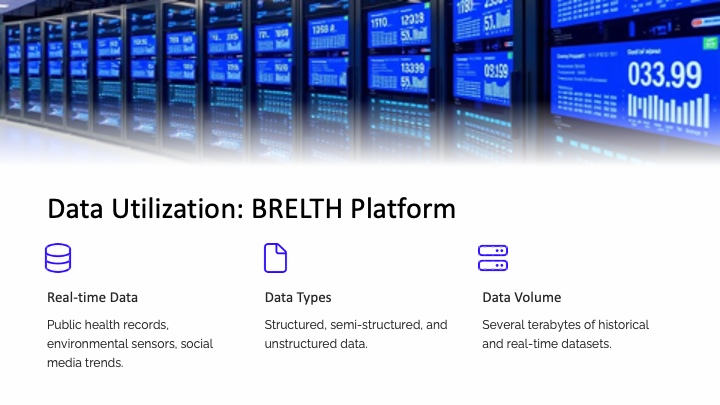
The project will utilize data from multiple sources. The primary data source is the BRELTH biosurveillance platform, which aggregates real-time data from public health records, environmental sensors, social media trends, news reports, and open-source intelligence. This data is structured (e.g., health records), semi-structured (e.g., social media data), and unstructured (e.g., news articles), encompassing several terabytes of historical and real-time datasets.
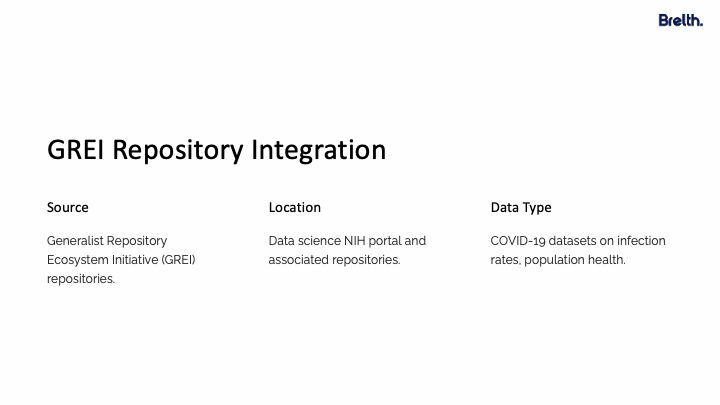
To complement BRELTH data, the project will incorporate datasets from GREI repositories, particularly from platforms like Zenodo, which house extensive COVID-19-related data, such as infection rates, population health statistics, genomics, and public health intervention outcomes. This integration will enhance the comprehensiveness of the analysis and improve the robustness of the predictive models.
Incorporating Data from GREI Repositories
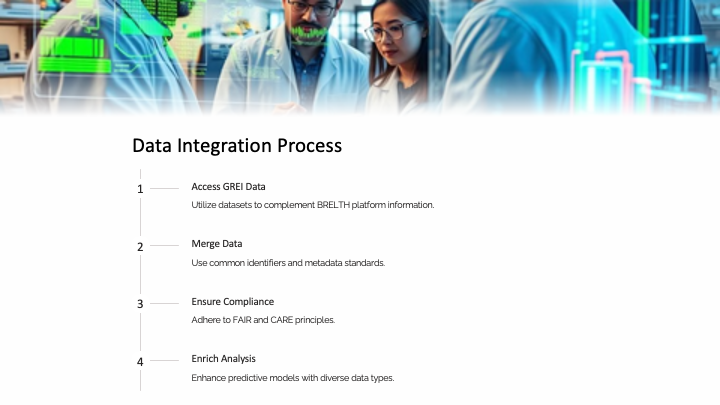
The integration of GREI repository data will involve retrieving relevant datasets and merging them with BRELTH data using common identifiers such as dates and geographic locations. This process will adhere to FAIR (Findable, Accessible, Interoperable, Reusable) principles, ensuring the datasets are easily discoverable, openly accessible, and interoperable with other datasets, while maintaining comprehensive documentation to enable reuse. The enriched dataset will provide a more holistic view of the factors driving COVID-19 outbreaks and enhance the project's analytical depth.
Methods and Analysis
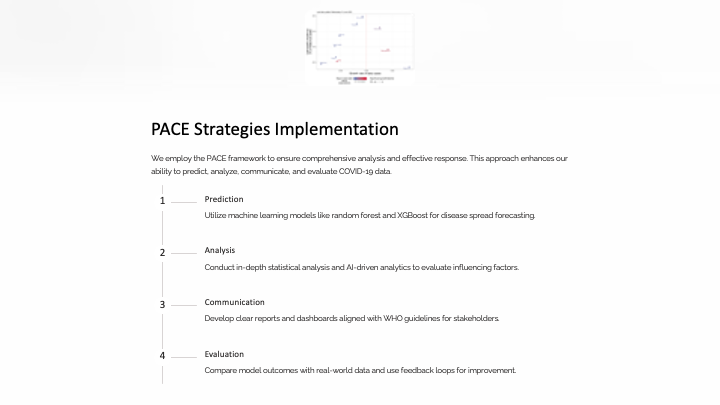
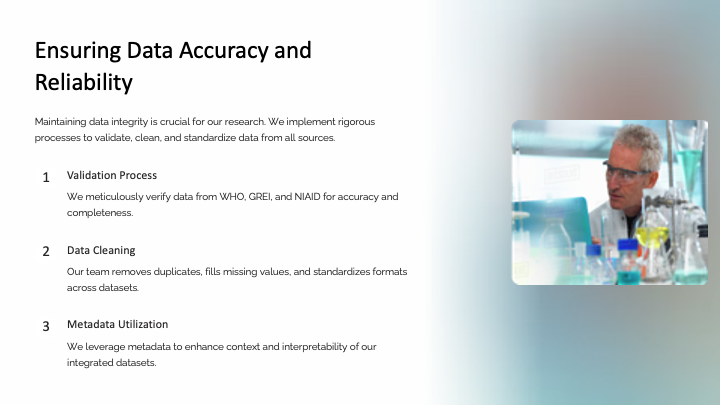
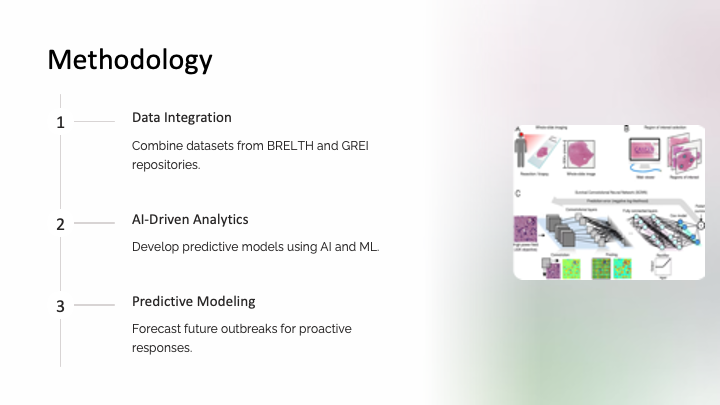
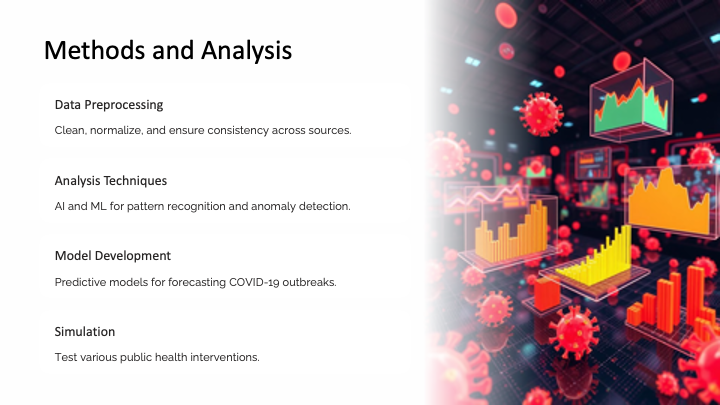
The analysis will involve several steps, starting with data preprocessing, which includes cleaning, normalizing, and ensuring consistency across all datasets. Advanced AI and machine learning algorithms will be employed for pattern recognition, anomaly detection, and predictive modeling. Statistical methods will be used to identify correlations and causative factors impacting COVID-19 spread, such as population density and the effectiveness of public health interventions. Predictive models will be developed and validated using historical and real-time data, enabling the forecasting of potential outbreaks and the assessment of different intervention strategies through simulation techniques.
This project will significantly contribute to public health preparedness by identifying key drivers of COVID-19 severity, developing effective predictive models, and informing policies to mitigate future outbreak
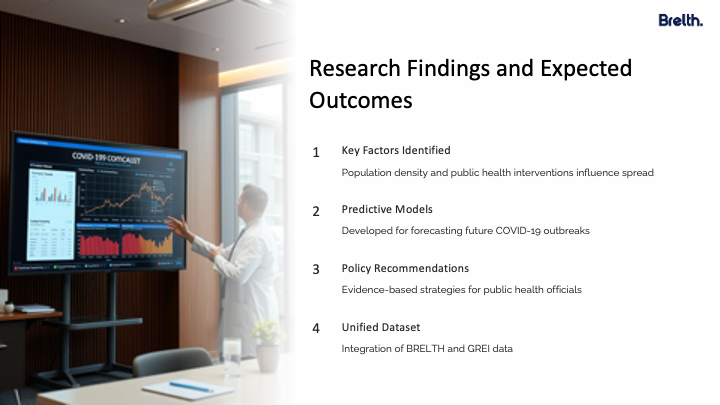
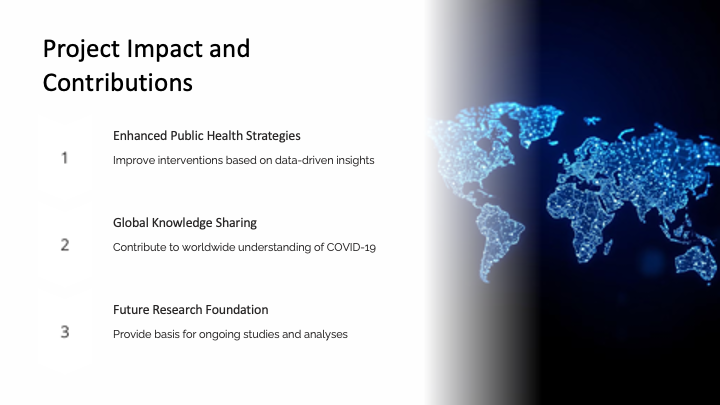
1. Research Findings and Summary of Outcomes: The project will identify key factors influencing COVID-19 spread, develop predictive models for future outbreaks, and provide evidence-based policy recommendations. It will produce a unified dataset integrating BRELTH and GREI data, enhancing public health strategies.
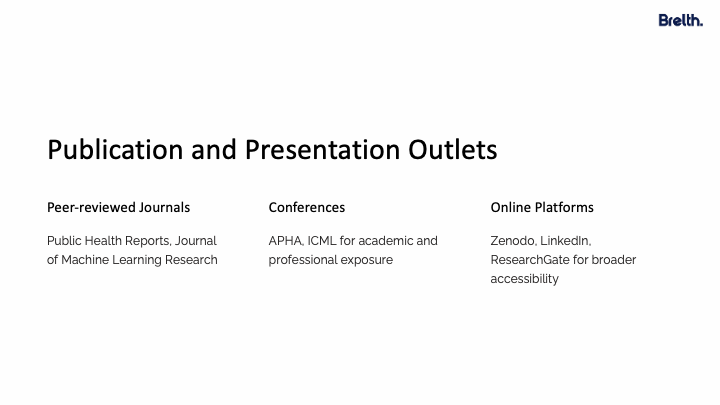
2. Sharing and Dissemination of Findings: Findings will be published in peer-reviewed journals, presented at major conferences (e.g., APHA, ICML), and shared via GREI repositories like Zenodo. Key insights will also be disseminated on professional platforms such as LinkedIn and ResearchGate.
3. Addressing FAIR and CARE Principles:
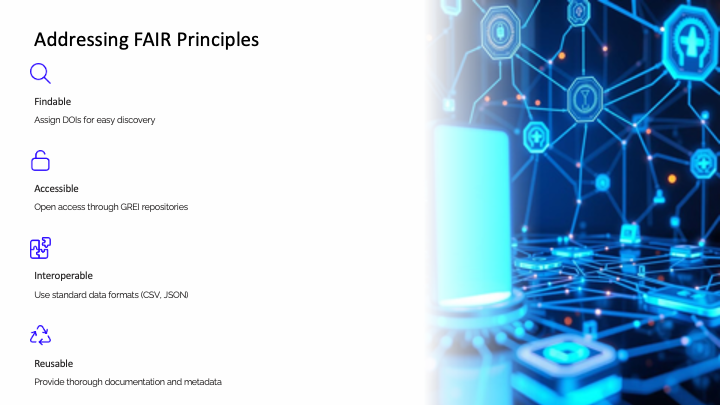
FAIR: Data will be made findable (DOIs), accessible (open access in GREI repositories), interoperable (standard formats), and reusable (thorough documentation).
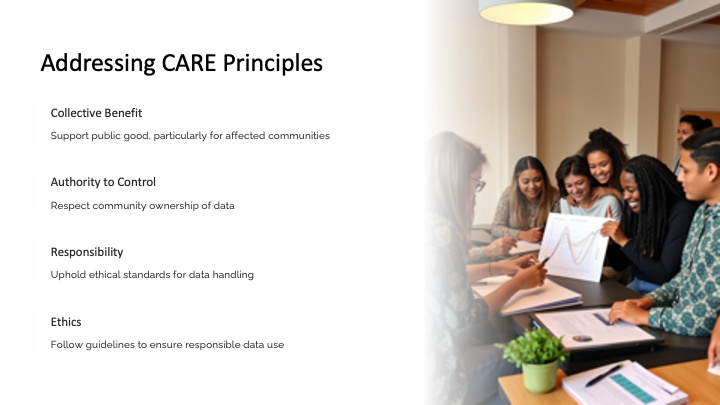
CARE: Where applicable, the project will ensure collective benefit, respect for data control authority, responsibility, and ethical standards.
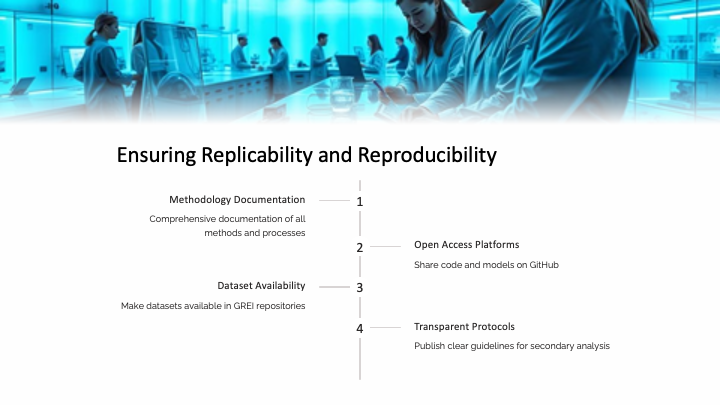
4. Ensuring Replicability and Reproducibility: The methodology, including data processing and model development, will be thoroughly documented and openly shared on platforms like GitHub. All datasets will be accessible in GREI repositories with comprehensive metadata to ensure replicability.
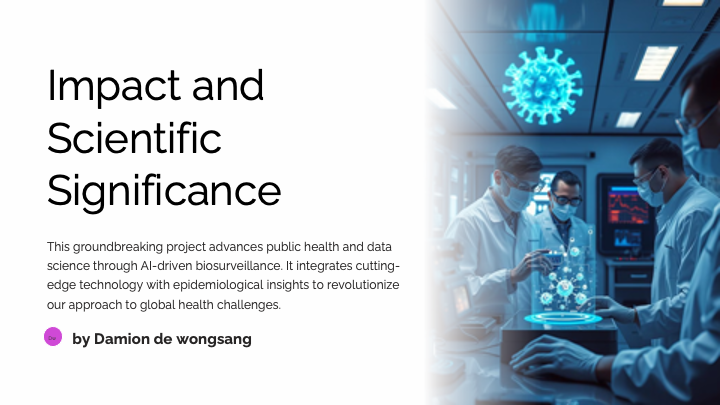
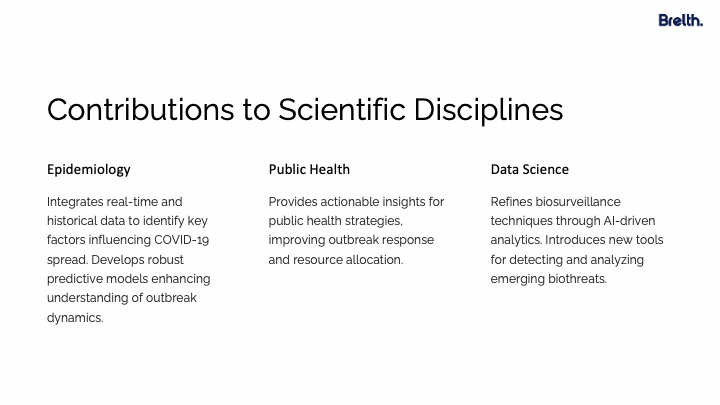
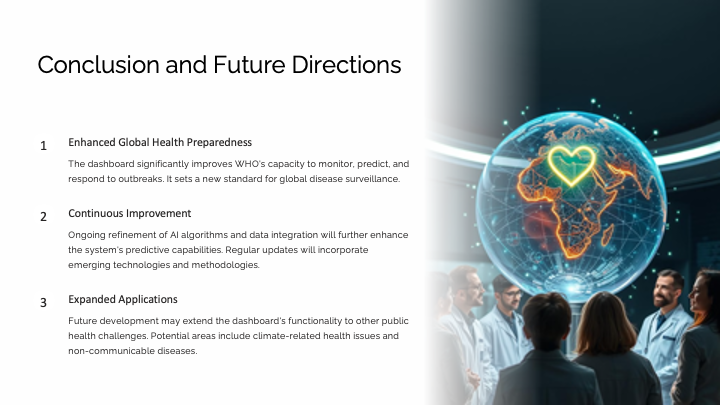
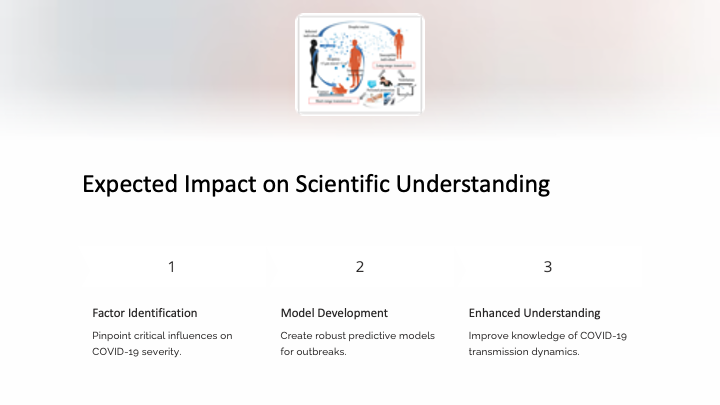
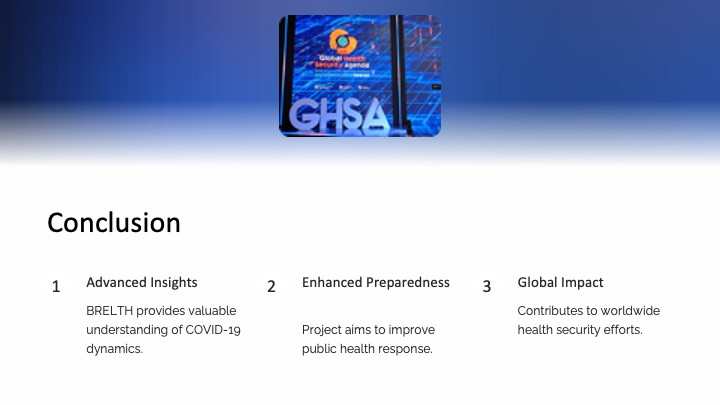
The COVID-19 Secondary Analysis Project aims to advance public health and data science through the development of an AI-driven biosurveillance system. This project will provide significant contributions to scientific disciplines, particularly epidemiology, public health, and data science.
Contributions to Scientific Disciplines
The project will offer substantial advancements in epidemiology by integrating real-time and historical data to identify key factors influencing COVID-19 spread. By developing robust predictive models, the research will enhance understanding of outbreak dynamics and provide actionable insights that can improve public health strategies. Additionally, the project introduces innovations in data science by refining biosurveillance techniques through AI-driven analytics, resulting in new tools and methodologies for detecting and analyzing emerging biothreats.
Impact on Diagnosis, Treatment, and Prevention
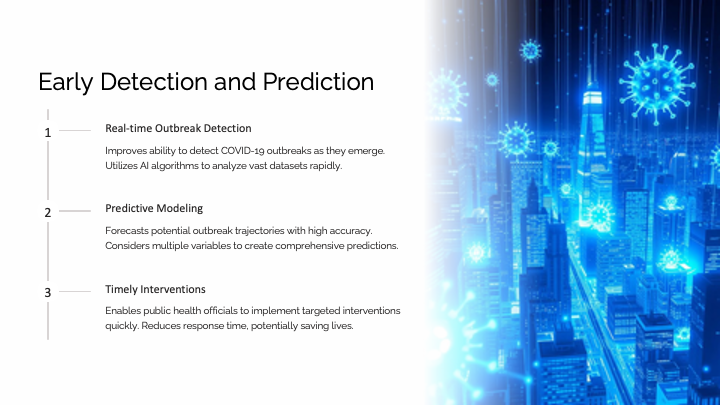
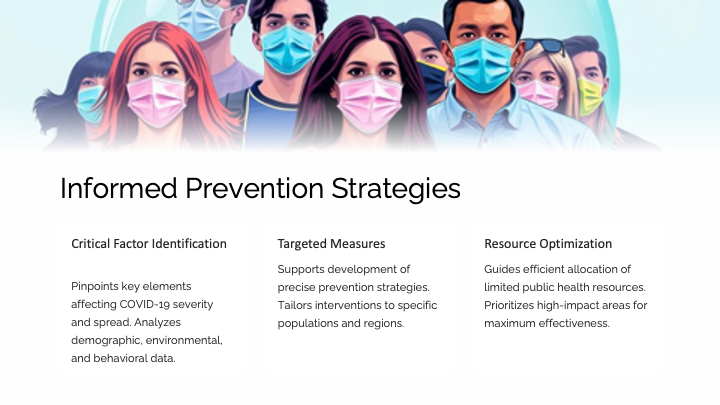
The project will significantly impact the early detection and prediction of COVID-19 outbreaks, enabling timely public health interventions to curb the spread of the virus. It will identify critical factors affecting the severity and spread, supporting the development of targeted and effective prevention measures. These contributions will help mitigate public health risks by facilitating faster responses, better resource allocation, and enhanced community resilience against future outbreaks.
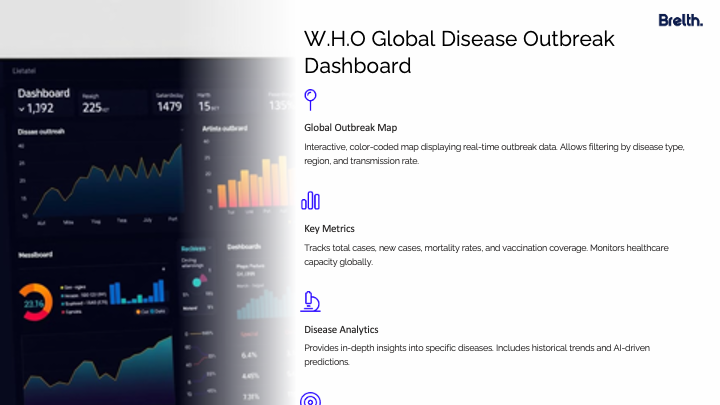
WHO Global Disease Outbreak Dashboard
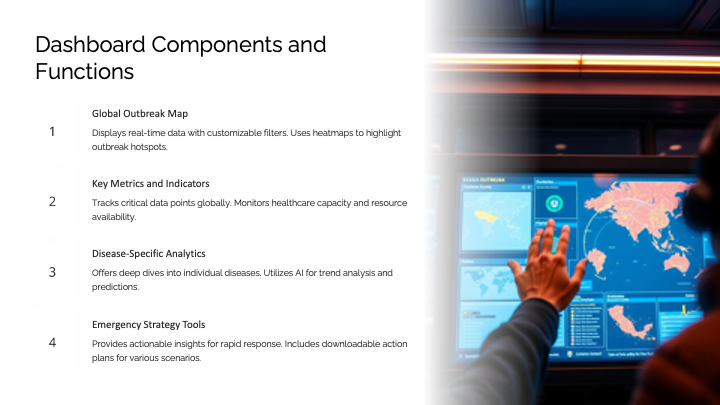
To complement the project’s goals, the proposed WHO Global Disease Outbreak Dashboard will serve as a comprehensive tool to track disease outbreaks in real time and develop emergency response strategies. Key features of the dashboard include an interactive global outbreak map, key metrics such as total and new cases, mortality rates, vaccination coverage, and healthcare capacity, as well as disease-specific analytics and emergency strategy tools.
Dashboard Components and Functions
The dashboard's components will include a global outbreak map displaying real-time data filtered by disease type, region, and transmission rate. Key metrics will track cases, mortality rates, vaccination coverage, and healthcare capacity globally. Disease-specific analytics will provide in-depth insights into specific diseases, while emergency strategy tools will include a risk assessment matrix, resource allocation recommendations, real-time alerts, and downloadable action plans.
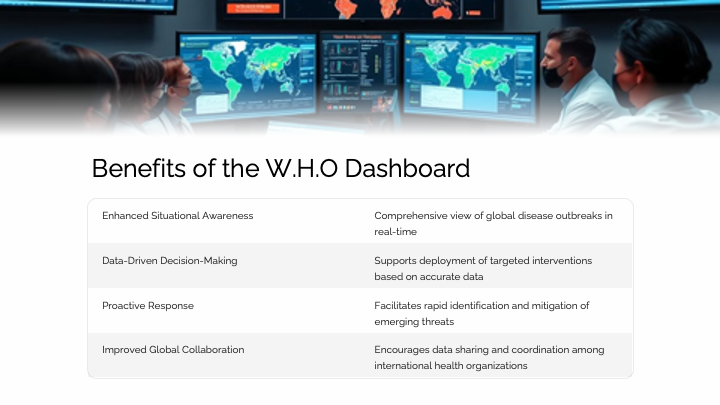
Benefits of the WHO Dashboard
The proposed dashboard will enhance situational awareness by offering a comprehensive view of global disease outbreaks in real time. It will support data-driven decision-making, facilitate proactive responses, and improve global collaboration by encouraging data sharing and coordination among international health organizations.
Our team, led by Damion Wongsang, brings together a dynamic group of professionals with expertise in business, data science, public health, and sustainability. We formed around a shared passion for innovative problem-solving, particularly in areas that drive social impact and technological advancement.
I am a business student at WGU working towards an MBA, with a deep thirst for solving complex challenges. My skills include the PACE model (Prediction, Analysis, Communication, and Evaluation), which I mastered through the Google "Data, Data, Everywhere" course. I also completed the Contact Tracing course at Johns Hopkins University, which solidified my understanding of public health strategies. As an entrepreneur, I founded Frezit Labs, a company focused on creating carbon-neutral, sustainable hardware solutions. Additionally, I am a proud member of Blacks in Technology, where I engage with like-minded professionals to push the boundaries of tech innovation.
Our team collaborates through regular meetings and digital tools, using our diverse expertise to tackle complex problems. We apply advanced statistical analysis and data modeling techniques to develop predictive models and actionable insights. Our goal is to combine data-driven decision-making with sustainable practices to create innovative solutions that address real-world challenges.