
In their desire to create machines that can analyze and interpret documents, Dynamic Risk - a leader in pipeline integrity engineering - has launched the Cognitive Computing Challenge. By sponsoring the creation of software that can extract and self-organize documented data, through the development of machine learning, they will vastly improve their ability to maintain pipeline safety.
Machine learning is already making a difference is in the healthcare industry. All over the world, biotech companies and research firms are looking to artificial intelligence, natural language processing and big data to produce new programs and algorithms that will make health care more automated and efficient.
For instance, the National Institute of Health (NIH) recently developed AiCure, an app that uses mobile technology to ensure that patients are getting the right medication. In addition to being able to identify patients, their medication, and the process of medication ingestion, the app is also able to flag adverse effects. All of this information is shared in real-time with the patient's doctor or clinician.
Similarly, Weltok - a Denver-based healthcare company - has enlisted the help of IBM's Watson supercomputer to create the Caféwell Concierge app. Using Watson’s natural language processing abilities, this app helps users to set and monitor health and fitness goals, and then provides guidance and support along the way.
Meanwhile Automated Insights, an artificial intelligence company based in Durham, North Carolina, has teamed up with mobile app developer GreatCall to create software that will notify families if a loved one is in danger. Known as GreatCall Link, this app uses Automated Insight's natural language platform (Wordsmith) and patented GPS technology to notify a user's family immediately if their device is used to call for help.
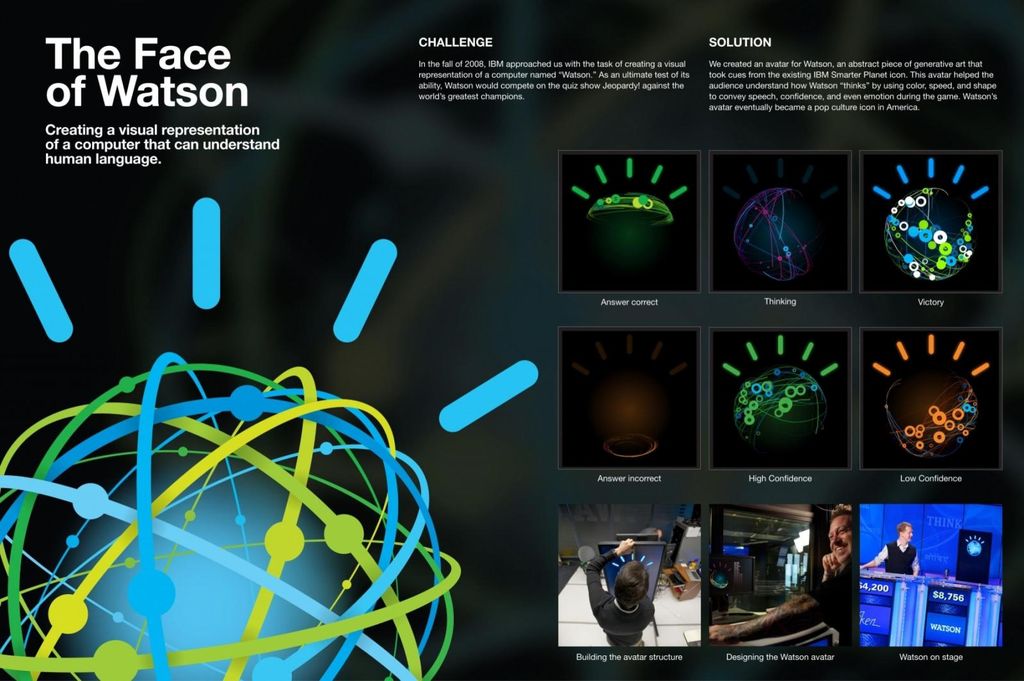
With its natural language processing abilities, IBM"s Watson supercomputer is helping to improve health care. Credit: IBM Research
Pharmaceutical and biotech companies are also looking to artificial intelligence and big data to identify new drug compounds. Examples include the Boston-area based startup Berg, which relied on data-driven methods to compare tissue samples from cancer patients and healthy patients to develop BPM 31510 - a drug that targets the mitochondria of cancer cells and triggers cell death.
Cloud Pharmaceuticals, a North Carolina-based company, has since followed suit; using a combination of cloud computing, intelligent optimization and a collaborative partner network to develop new drugs to treat cancer.
IT companies and artificial intelligence laboratories are turning their computing resources towards the development of better medicine as well. IBM's Watson, in addition to helping companies develop apps, is also part of a broader effort in healthcare to provide more targeted cancer care based on the patients medical history and other data.
At the same time, researchers at MIT's Computer Science and Artificial Intelligence Laboratory (CSAIL) are combining big data sets from previous cancer cases with new algorithms to make more accurately diagnoses. Thanks to a collaborative effort with Massachusetts General Hospital, they recently developed a computer model that can help doctors to distinguish between forms of lymphoma with greater speed and ease.
Naturally, there are those who have expressed fear about what the emergence of AI will entail for humanity. But when it comes to the field of medicine, machines that can analyze, interpret and compare massive fields of data are a seen as a godsend. In addition to helping physicians come up with better treatments and diagnoses, they are helping to shave years and billions of dollars off the drug development process.
Do you have ideas on how machine learning can be used to make a difference? Register in the Cognitive Computing Challenge for a chance to win the $200,000 prize!
Top Image Credit: spectrum.mit.edu